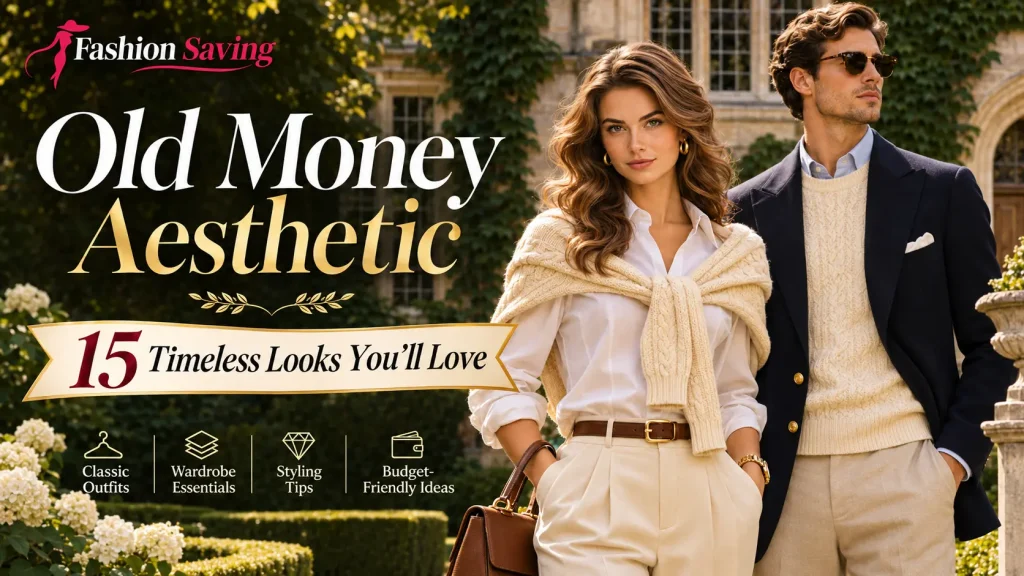
The old money aesthetic is all about looking effortlessly polished through timeless clothing, thoughtful tailoring, understated colors, and simple accessories. Think navy blazers, crisp white shirts, cream sweaters, tailored trousers, leather loafers, and elegant coats that never seem to go out of style.
But here’s what makes this fashion aesthetic worth exploring: you don’t need old money or even a large shopping budget to dress this way.
The most convincing outfits aren’t necessarily the most expensive. They’re the ones where the clothing fits comfortably, the colors work together, and every piece feels intentional.
Whether you’re building a wardrobe from scratch or trying to make better use of clothes you already own, this guide covers the essentials. You’ll discover 15 wearable old money outfits for women and men, the colors and fabrics that define the look, capsule wardrobe ideas, and practical ways to achieve timeless elegance without overspending.
What Is the Old Money Aesthetic?
The old money aesthetic is a fashion style inspired by traditional upper-class dressing, particularly American preppy fashion, British heritage clothing, and understated European tailoring. It emphasizes timeless silhouettes, coordinated neutral colors, quality construction, and minimal branding rather than flashy trends or obvious displays of wealth.
A typical old money outfit might combine a cream sweater, navy tailored trousers, brown loafers, and a simple leather belt. None of these pieces needs to carry a luxury label. The appeal comes from how naturally they work together.
Where Did the Old Money Aesthetic Come From?
The expression old money traditionally refers to wealth passed down through generations, rather than recently acquired wealth.
The modern fashion aesthetic borrows its visual identity from clothing associated with affluent families, historic universities, country clubs, and traditional leisure activities.
American influences include Ivy League-inspired outfits, Oxford shirts, chinos, polo shirts, blazers, and cable-knit sweaters. British heritage dressing contributes wool coats, tweed jackets, structured tailoring, and traditional country clothing.
European interpretations often feature linen suits, relaxed tailoring, fine knitwear, and understated leather accessories.
Many of these garments have been worn for decades. What’s relatively new is the way social media has grouped them under one recognizable fashion label.
As Harvard’s discussion of preppy style explains, the visual traditions behind today’s old money aesthetic have deep connections to American preppy fashion.
The modern version isn’t an exact historical dress code, though. It’s a contemporary interpretation shaped by fashion photography, films, television, and online trends.
What Are the Main Characteristics of Old Money Style?
Although there’s no official rulebook, several styling principles appear consistently.
- Timeless silhouettes: Straight-leg trousers, structured blazers, classic skirts, simple dresses, and well-proportioned coats.
- Understated colors: Navy, cream, beige, brown, white, charcoal, and muted accent shades.
- Refined fabrics: Cotton, linen, wool, fine knitwear, and other materials suited to the garment.
- Minimal branding: Clothing that doesn’t depend on large logos to make an impression.
- Thoughtful accessories: Loafers, structured handbags, simple watches, and restrained jewelry.
- Good fit and maintenance: Clothing that hangs naturally, feels comfortable, and remains in good condition.
The aim isn’t to follow every principle perfectly. It’s to create outfits that feel coordinated, practical, and personal.
How to Dress Old Money: 5 Simple Styling Rules
If you’re new to the aesthetic, start with these five principles before buying anything.
1. Build Your Outfit Around One Classic Piece
Choose a blazer, tailored trousers, a button-down shirt, or a fine-knit sweater as your starting point.
For example, a navy blazer can work with cream trousers for dinner, straight-leg jeans for a weekend, or a simple dress for the office.
One versatile piece gives you several styling possibilities.
2. Keep Your Color Palette Coordinated
Begin with two complementary neutrals. Add a third shade through your footwear, outerwear, or accessories if the outfit needs more depth.
A white shirt, navy trousers, and brown loafers are an easy example.
You don’t have to dress entirely in beige. Burgundy, olive, dark green, and soft blue can also fit naturally into the aesthetic.
3. Focus on Fit Before Labels
Even an expensive blazer can look awkward if the shoulders are too tight or the sleeves are excessively long.
Check how clothing falls when you’re standing, sitting, and walking.
A moderately priced garment that fits properly is often a more useful purchase than a designer piece that requires extensive alterations.
4. Choose Accessories That Complement the Outfit
Simple jewelry, a leather belt, a structured bag, or a classic watch can add finishing touches.
You don’t need all of them at once.
Start with the clothes, identify what’s missing, and add one or two accessories that support the overall look.
5. Dress for Your Actual Lifestyle
A wool blazer might be perfect for a cool autumn day but uncomfortable during a humid summer afternoon.
Borrow the style’s colors and proportions while adapting fabrics, layers, and footwear to your weather and daily activities.
The best old money outfits should feel as comfortable to wear as they are attractive to look at.
Old Money vs. Quiet Luxury, Preppy, and New Money Style
Old money fashion is often confused with quiet luxury and preppy clothing. These aesthetics overlap, but they emphasize different elements.
| Fashion aesthetic | Defining features | Key difference |
| Old money | Heritage-inspired clothing, classic tailoring, loafers, knitwear, understated colors | Draws on traditional preppy and upper-class visual references |
| Quiet luxury | Minimalist silhouettes, discreet design, refined materials | Often more contemporary and less visibly preppy |
| Preppy | Polo shirts, Oxford shirts, pleated skirts, stripes, chinos | Generally sportier and sometimes more colorful |
| New money aesthetic | Statement fashion, visible logos, bold luxury accessories | Often associated with conspicuous displays of wealth |
| Dark academia | Tweed, deep colors, vintage layers, scholarly influences | Focuses on literary and academic visual references |
These are fashion descriptions, not reliable indicators of someone’s financial circumstances.
Old Money vs. Quiet Luxury: What’s the Difference?
Old money style emphasizes heritage-inspired dressing, while quiet luxury generally emphasizes understated luxury and minimalist design.
For example, a cable-knit sweater, pleated chinos, and loafers create a recognizable old money outfit.
A streamlined coat, plain knit top, and minimalist trousers may lean closer to quiet luxury.
Both can look sophisticated. The distinction comes primarily from their styling references and overall mood.
Old Money vs. Dark Academia
These styles share several wardrobe pieces, including tailored trousers, loafers, Oxford shirts, and structured coats.
However, dark academia usually features darker palettes, vintage-inspired textures, and more layered outfits.
A cream sweater with beige trousers and tan loafers suggests traditional old money styling.
Replace the beige trousers with charcoal wool pants, add a brown tweed blazer, and finish with leather lace-up shoes. The result feels closer to dark academia.
For more ideas featuring heritage fabrics and scholarly-inspired outfits, explore our dark academia fashion guide.
The Old Money Color Palette: Best Colors and Combinations
The old money aesthetic typically uses a restrained palette of navy, cream, white, beige, camel, charcoal, brown, and black. Muted accents such as burgundy, olive, and forest green add variety without overwhelming an outfit.
These shades work well because many can be combined across different garments, making outfit planning easier.
Essential Old Money Colors
| Color | Ideal wardrobe pieces | Best combinations |
| Navy blue | Blazers, trousers, knitwear | White, beige, camel |
| Ivory and cream | Shirts, sweaters, dresses | Navy, brown, burgundy |
| Beige and camel | Chinos, coats, trousers | White, chocolate brown, black |
| Charcoal grey | Tailored suits, trousers, coats | Light blue, cream, burgundy |
| Chocolate brown | Loafers, belts, handbags | Beige, ivory, olive |
| Forest green | Sweaters, jackets, scarves | Cream, navy, tan |
| Burgundy | Knitwear, bags, accessories | Navy, grey, ivory |
Five Elegant Color Combinations to Try
Navy and cream: A navy blazer with cream trousers creates a crisp, versatile outfit.
Camel and chocolate brown: Combine a camel coat with brown boots and a light-colored sweater for autumn.
Charcoal and light blue: Grey tailored trousers with a light-blue shirt work especially well for office dressing.
Ivory and forest green: An ivory knit with dark green trousers provides subtle contrast.
Burgundy and navy: A burgundy cardigan or scarf adds a little richness to a navy outfit.
A useful trick is to repeat one color in two places. Brown loafers and a brown belt, for example, can make a white-shirt-and-navy-trouser combination feel more cohesive.
However, your accessories don’t need to match exactly. Similar undertones are often enough.
Do You Have to Wear Neutral Colors?
Not at all.
Neutral colors make a wardrobe easier to coordinate, but they aren’t the only route to timeless style.
Muted blue, soft pink, deep red, olive, and burgundy can all work beautifully. Even brighter shades can fit when used intentionally.
Choose colors that complement your complexion, personal preferences, and existing clothing rather than buying beige simply because it’s popular online.
Old Money Wardrobe Essentials for Women
A practical old money wardrobe for women starts with versatile clothing that can transition between work, casual outings, and more polished occasions.
You don’t need every item immediately. Begin with pieces you already own and identify what would genuinely improve your outfit options.
Tailored Blazers
A navy, charcoal, beige, or black blazer can become one of the most frequently worn items in your wardrobe.
Look for shoulders that sit comfortably and enough room to button the jacket without excessive pulling.
A relaxed blazer can work with fitted trousers, while a more structured version can balance wide-leg pants or a flowing skirt.
White Shirts and Elegant Blouses
A crisp cotton shirt works with trousers, skirts, denim, and knitwear.
A fluid blouse in ivory, champagne, or another understated shade offers a softer alternative for work or dinner.
The neckline and fabric matter as much as the color. Choose something that suits your preferred level of coverage and feels comfortable throughout the day.
Tailored Trousers
Straight-leg, pleated, and gently wide-leg trousers are all useful.
Black, cream, navy, and taupe are especially versatile.
Check the waistband, rise, thigh fit, and hem length before buying. The trousers should allow comfortable movement without constant adjusting.
Fine-Knit Cardigans and Sweaters
Simple cardigans, crewneck sweaters, and V-neck knits provide easy layering options.
A cream cardigan can be worn over a shirt, with tailored trousers, or alongside dark jeans.
If you enjoy combining knitwear with denim, our guide to styling a cropped cardigan with jeans offers additional outfit combinations.
Simple Dresses and Midi Skirts
A black midi dress, shirt dress, or softly structured skirt can create a refined outfit with relatively little styling effort.
Choose silhouettes that work with your proportions and lifestyle.
The right dress should be comfortable enough to wear regularly rather than reserved for photographs.
Classic Outerwear
Trench coats suit mild and transitional weather, while wool coats or insulated jackets are more practical for colder conditions.
A neutral coat can coordinate with several outfits, making it a useful wardrobe investment when the climate justifies it.
Old Money Wardrobe Essentials for Men
Men’s old money fashion often draws from traditional American preppy clothing and classic European tailoring.
The best starting pieces are those that work across multiple occasions.
Oxford Shirts
White and light-blue Oxford button-down shirts pair naturally with chinos, tailored trousers, and blazers.
Look for a collar that sits comfortably and shoulders that don’t pull when you move.
Chinos and Tailored Trousers
Beige chinos, navy trousers, and charcoal wool pants can provide the foundation for several outfits.
Straight or gently tapered cuts are easy to style with knitwear, shirts, and different footwear.
Navy Blazers
A navy blazer works with cream trousers for a dressier outfit or chinos for a relaxed weekend look.
Choose one that fits comfortably through the chest, shoulders, and arms.
Polo Shirts and Classic Knitwear
A well-fitting polo shirt is useful during warmer weather.
For cooler days, consider a cable-knit sweater, merino crewneck, or knitted cardigan.
Solid colors and understated patterns offer plenty of styling flexibility.
Classic Shoes and Outerwear
Brown loafers, leather derbies, Chelsea boots, and clean, simple sneakers can all suit different old money outfits.
For outerwear, a wool overcoat, trench coat, or classic jacket may work depending on your local weather.
Comfort and versatility should guide your choices more than any specific luxury label.
15 Old Money Aesthetic Outfit Ideas for Women and Men
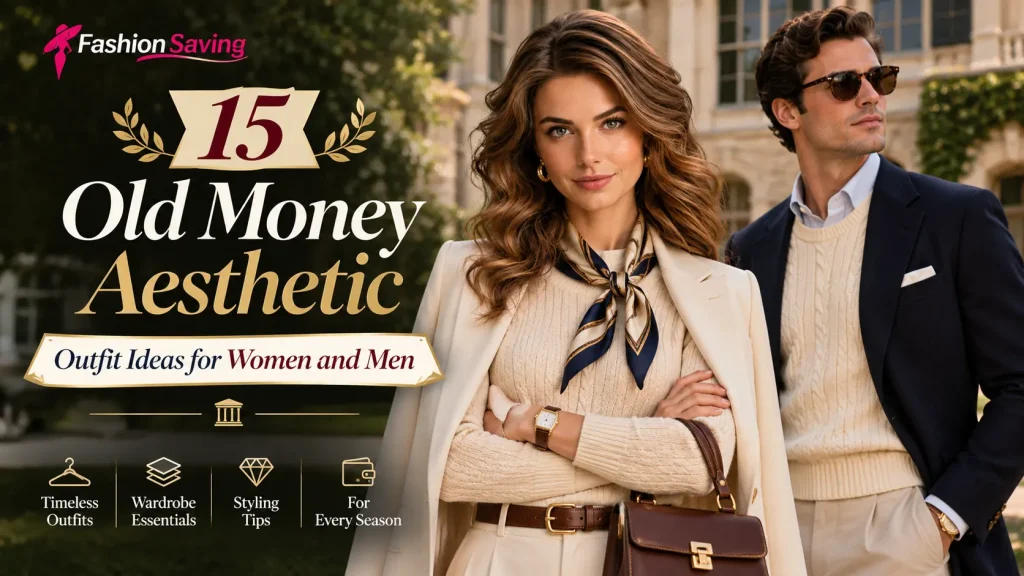
The easiest way to understand old money fashion is to see how individual pieces work together.
These 15 outfit formulas include classic wardrobe combinations, styling advice, suitable occasions, and affordable alternatives.
The first eight focus on women’s styling, while the remaining seven focus on men’s outfits. Many of the ideas can be adapted across different wardrobes.
1. White Button-Down Shirt With Beige Tailored Trousers
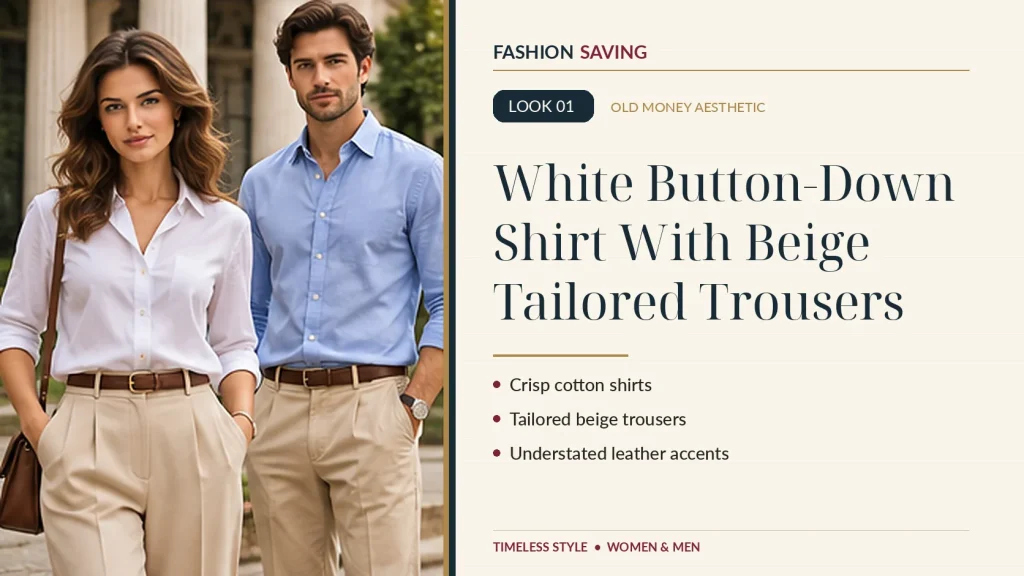
Best for: Office wear, college, daytime meetings, and smart-casual occasions.
Outfit formula: White cotton shirt + beige tailored trousers + brown loafers + structured handbag.
A white button-down shirt and beige trousers are a simple foundation for an elegant outfit.
The clean shirt provides structure around the shoulders, while beige trousers create a softer appearance than black tailored pants.
Choose trousers with a comfortable waistband and a hem that sits neatly around your shoes.
For a defined silhouette, tuck the shirt into high-waisted trousers. If you prefer a relaxed look, choose a slightly shorter shirt or try a partial tuck.
Brown loafers and a structured bag complete the outfit without requiring elaborate accessories.
Budget styling tip: Start with trousers you already own. A clean, pressed cotton shirt can look polished without being expensive.
2. Navy Blazer With Straight-Leg Jeans
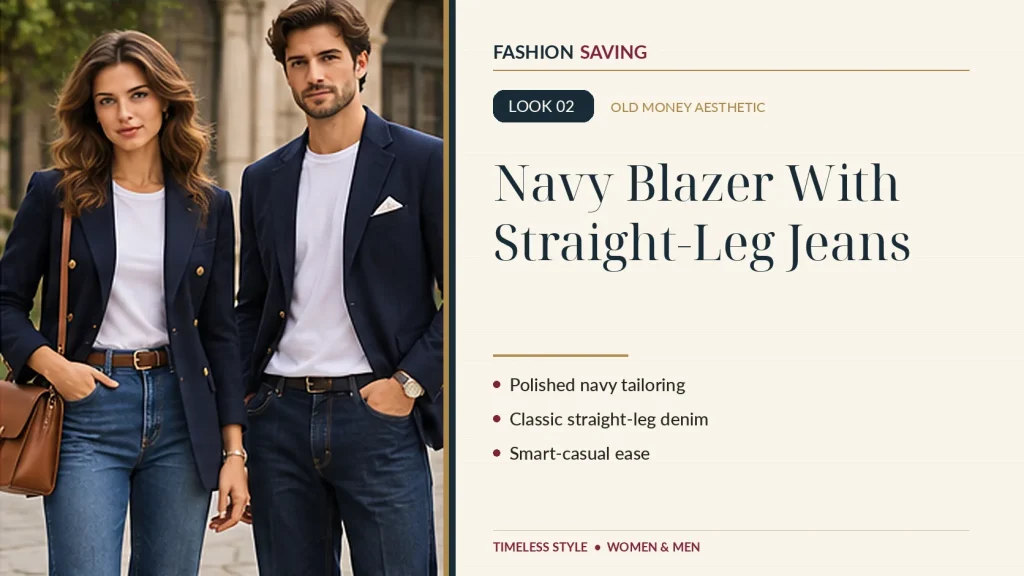
Best for: Casual Fridays, weekend lunches, coffee dates, and shopping trips.
Outfit formula: Navy blazer + plain white T-shirt + dark straight-leg jeans + leather loafers.
Old money outfits don’t always have to be formal.
A navy blazer can make everyday jeans look more put together, especially when the denim has a clean finish and minimal distressing.
Choose a white or ivory T-shirt underneath for a relaxed contrast.
If your blazer is oversized, balance it with straighter jeans or a more fitted top.
Brown loafers create a softer look, while black footwear gives the outfit a sharper finish.
Budget styling tip: Secondhand blazers can be good finds when the shoulders fit properly. Minor sleeve alterations may help, but major shoulder adjustments can become costly.
3. Cream Cardigan With a Pleated Midi Skirt
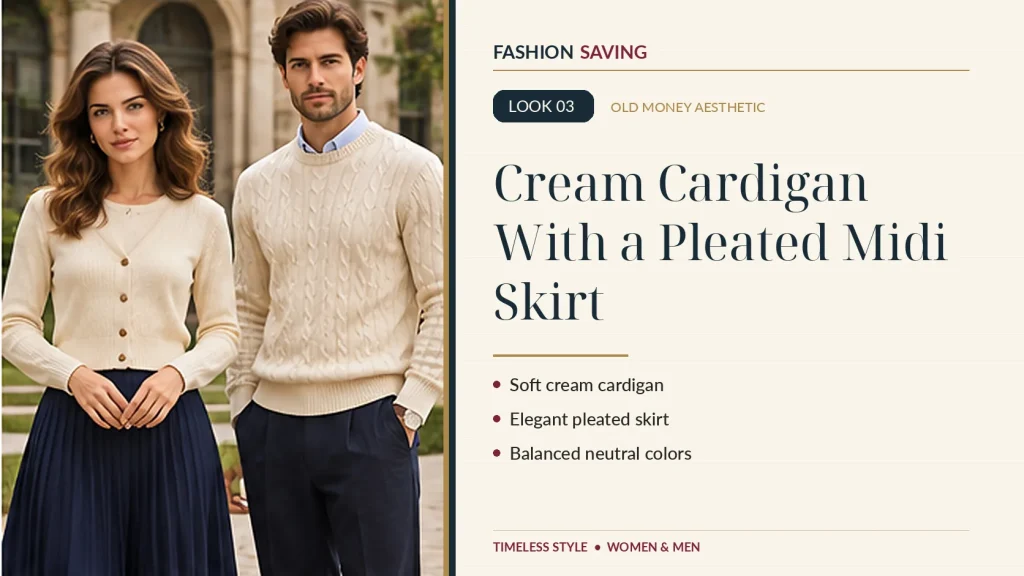
Best for: Brunch, daytime events, casual meetings, and spring outings.
Outfit formula: Cream cardigan + navy pleated midi skirt + ballet flats + small shoulder bag.
This combination creates a softer interpretation of classic fashion.
The cardigan adds warmth and texture, while the pleated skirt introduces movement.
A cardigan that ends near your natural waist can emphasize the skirt’s shape. Longer cardigans can work too, especially when worn open over a simple fitted top.
Add ballet flats and small earrings for a comfortable daytime look.
Budget styling tip: Cotton knitwear can provide the same understated visual effect as more expensive fibers when the garment fits well and holds its shape.
4. Striped Sweater With White Trousers
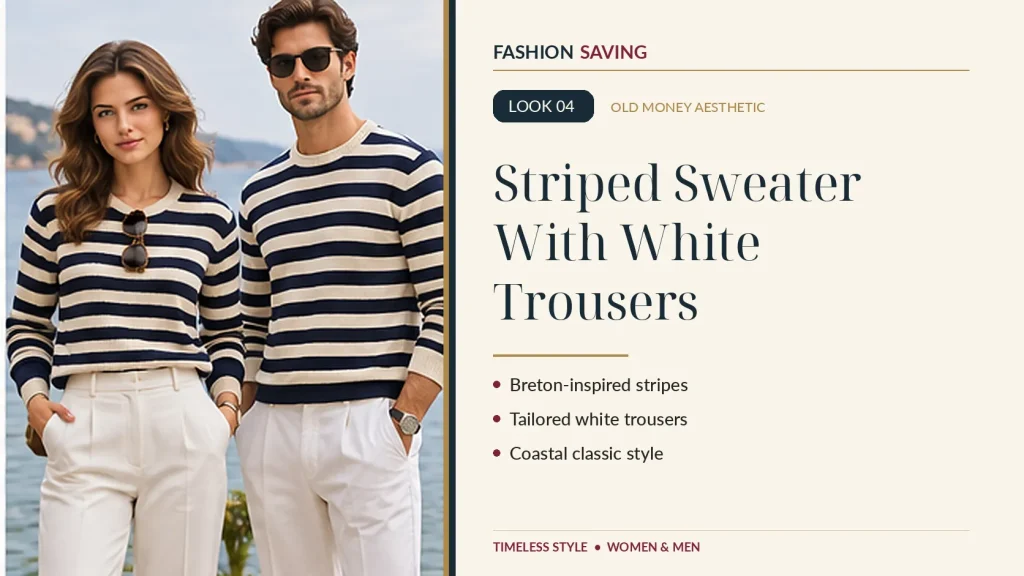
Best for: Coastal trips, spring weekends, sightseeing, and casual lunches.
Outfit formula: Navy-and-white striped sweater + white trousers + tan loafers + sunglasses.
Striped knitwear is strongly associated with nautical and traditional preppy dressing.
A navy-and-white sweater looks particularly fresh with white or stone-colored trousers.
Choose a lightweight knit for mild weather and make sure the trousers have enough structure to balance the sweater.
Keep other patterns to a minimum. The stripes already provide the outfit’s main visual detail.
If white trousers feel impractical, replace them with light-beige chinos.
Budget styling tip: A striped top you already own can achieve the same effect. You don’t need clothing specifically marketed as old money fashion.
5. Camel Trench Coat With Cream Trousers
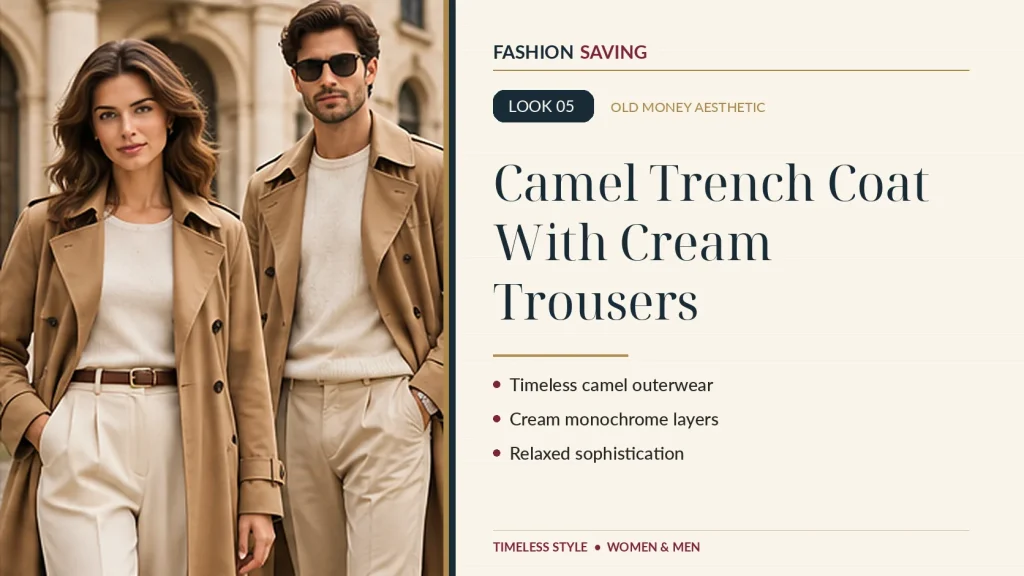
Best for: Spring commutes, autumn walks, travel, and smart-casual days.
Outfit formula: Camel trench coat + ivory knit + cream trousers + brown ankle boots.
A trench coat adds structure to otherwise simple clothing.
Wearing similar colors underneath creates a coordinated base, while the camel coat provides contrast.
Choose a coat that allows comfortable movement over your preferred layers.
For a more casual variation, replace cream trousers with dark blue jeans.
A small brown handbag or matching belt can provide a finishing touch.
Budget styling tip: Look for secure buttons, a comfortable lining, and a good shoulder fit instead of shopping by brand reputation alone.
6. Black Midi Dress With Ballet Flats
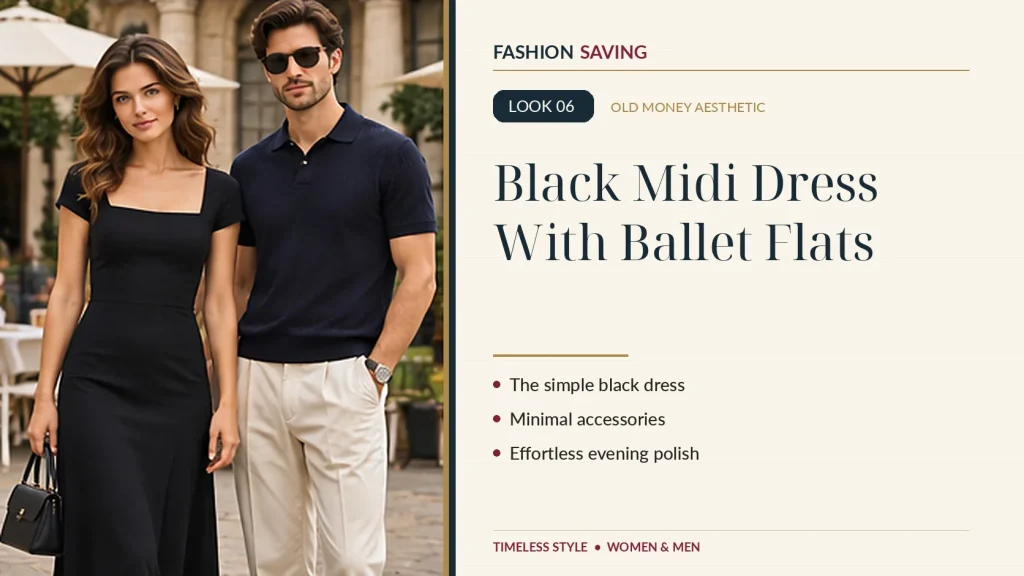
Best for: Dinner dates, gallery visits, daytime celebrations, and casual work events.
Outfit formula: Black midi dress + ballet flats + small handbag + simple jewelry.
A plain black dress is one of the easiest pieces to restyle for different occasions.
Choose a silhouette that feels comfortable and works with your usual activities.
A lightweight cardigan can make it more relaxed, while a blazer adds structure.
Black ballet flats create a coordinated look. Tan flats can soften the contrast, especially when paired with a similar handbag.
A delicate necklace or simple earrings may be all the accessories you need.
Budget styling tip: Before buying multiple occasion-specific dresses, try restyling one versatile piece with different shoes and outerwear.
7. Ivory Linen Shirt With Relaxed Trousers
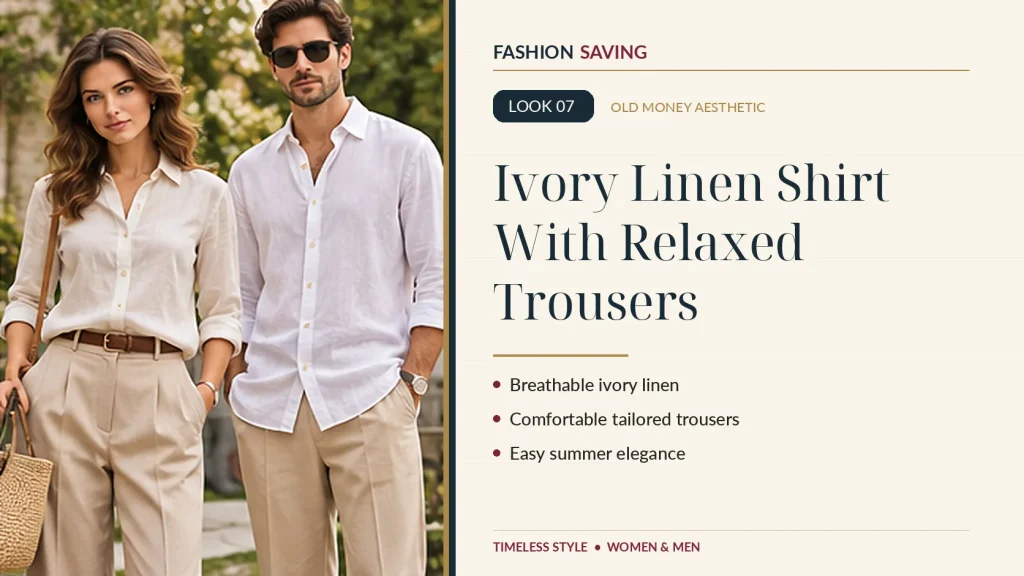
Best for: Summer holidays, outdoor lunches, travel, and warm-weather weekends.
Outfit formula: Ivory linen shirt + beige relaxed trousers + leather sandals + woven or structured bag.
Linen is a practical option for warmer weather because its texture and breathability suit relaxed summer dressing.
Pair a linen shirt with lightweight trousers that allow air to circulate.
Roll the sleeves neatly and leave the collar slightly open for a comfortable finish.
A brown belt or understated watch can add detail without introducing unnecessary layers.
Natural wrinkles are part of linen’s character, so the outfit doesn’t need to look perfectly pressed throughout the day.
Budget styling tip: A cotton-linen blend can be worth considering if you want a different balance of comfort, care, and texture.
8. Charcoal Wool Coat With a Cream Turtleneck
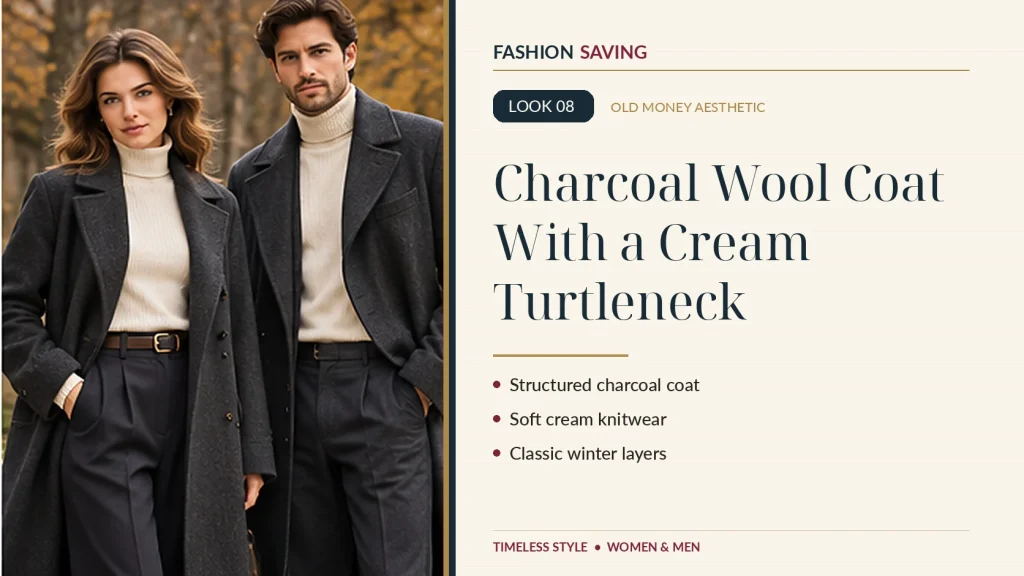
Best for: Winter office wear, city outings, evening events, and cold-weather travel.
Outfit formula: Charcoal coat + cream turtleneck + black tailored trousers + leather ankle boots.
Winter old money outfits often rely on carefully chosen layers.
A cream knit creates contrast beneath a darker coat, while black trousers keep the lower half simple.
Choose a coat that fits comfortably over the sweater rather than pulling tightly around the shoulders.
A structured handbag and practical scarf complete the look.
For a softer palette, try a camel coat with chocolate-brown trousers.
If you prefer relaxed trousers in winter, our guide to casual winter outfits with wide-leg trousers offers additional layering combinations.
Budget styling tip: When buying secondhand wool coats, inspect the cuffs, lining, buttons, and fabric for wear before purchasing.
9. Light-Blue Oxford Shirt With Beige Chinos
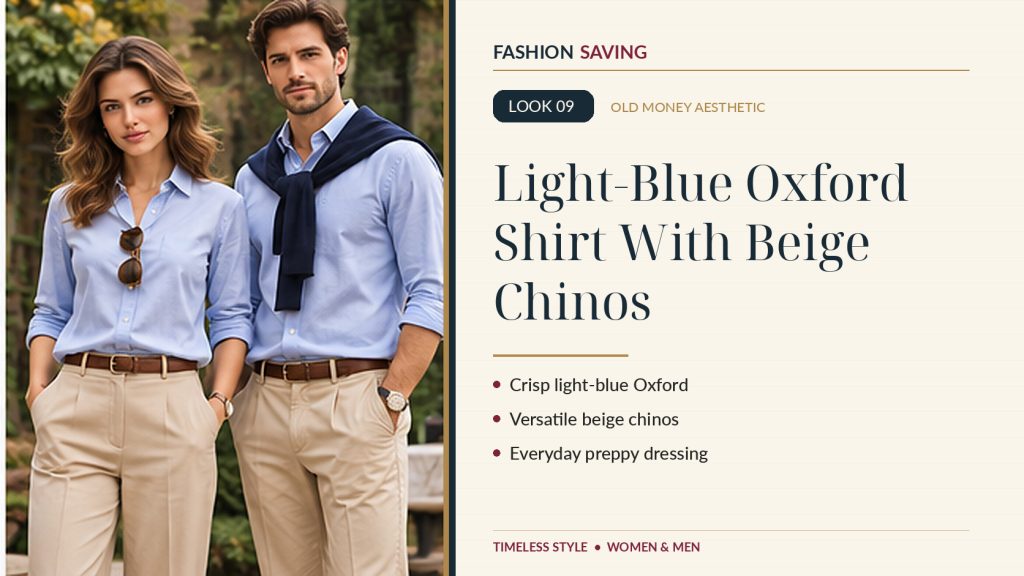
Best for: Smart-casual offices, college events, weekend lunches, and daytime gatherings.
Outfit formula: Light-blue Oxford shirt + beige chinos + brown loafers + leather belt.
This combination draws directly from traditional American preppy dressing.
The light-blue shirt creates a subtle contrast with beige chinos, while brown footwear completes the palette.
Choose chinos that fit comfortably through the waist and thighs.
Tuck the shirt in for a smarter appearance. If you prefer wearing it untucked, select a casual shirt length that doesn’t extend too far below the hips.
A navy sweater can add an extra layer in cooler weather.
Budget styling tip: Prioritize a shirt that fits and chinos that sit neatly over your shoes before spending money on accessories.
10. Cream Cable-Knit Sweater With Navy Trousers
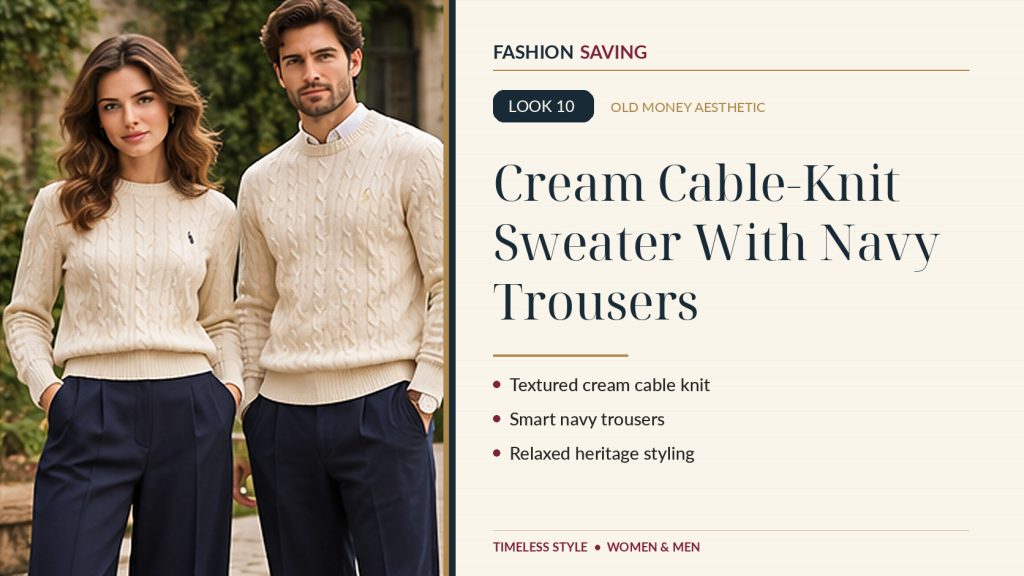
Best for: Autumn weekends, casual dinners, university events, and cooler holidays.
Outfit formula: Cream cable-knit sweater + navy tailored trousers + brown loafers.
A cable-knit sweater adds texture to a simple outfit.
Navy trousers balance the knitwear with a cleaner silhouette.
Wear the sweater on its own or layer a light-blue Oxford shirt underneath, allowing a small portion of the collar to show.
Avoid oversized layers that bunch around the shoulders or waist.
For a more casual version, swap wool trousers for well-fitting navy chinos.
Budget styling tip: Look for knitwear with neat cuffs, a comfortable neckline, and minimal pilling. Fiber type alone won’t tell you whether a sweater is well made.
11. Navy Blazer With Cream Tailored Trousers
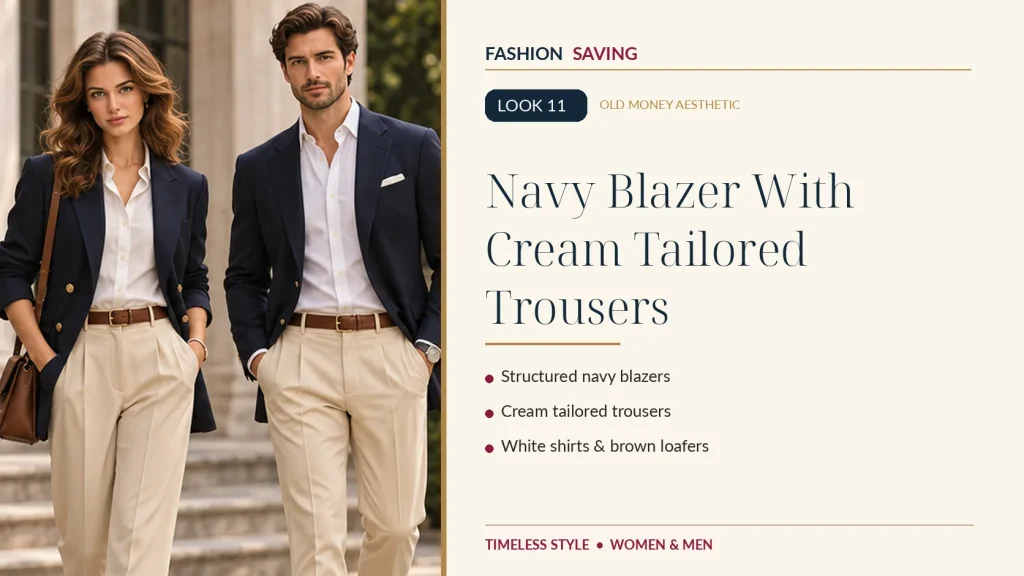
Best for: Daytime weddings, smart-casual dinners, celebrations, and business-casual events.
Outfit formula: Navy blazer + white shirt + cream trousers + brown leather loafers.
A navy blazer paired with cream trousers creates a traditional tailored look without requiring a complete suit.
The darker jacket provides structure, while lighter trousers keep the outfit from feeling overly formal.
For special occasions, consider a subtle tie or pocket square.
For everyday wear, leave the top shirt button open and keep accessories minimal.
Check that your trousers aren’t overly transparent and that the blazer closes comfortably.
Budget styling tip: A versatile navy blazer can be worn with several pairs of trousers, giving you more outfit combinations than a highly occasion-specific jacket.
12. Knitted Polo With Pleated Trousers
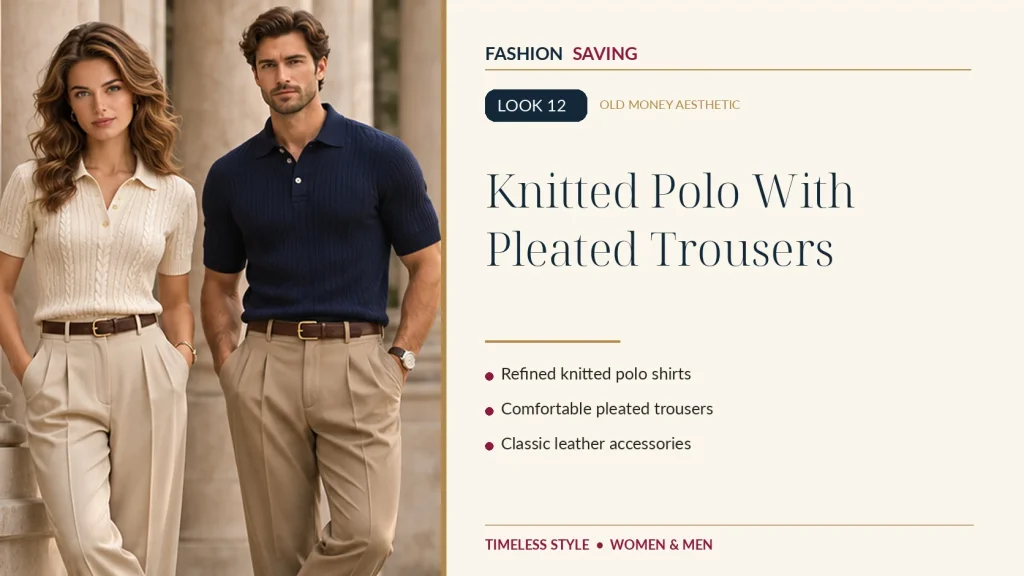
Best for: Warm-weather dates, dinner outings, holidays, and relaxed business-casual occasions.
Outfit formula: Chocolate-brown knitted polo + stone pleated trousers + brown loafers.
A knitted polo offers a slightly more refined alternative to an everyday jersey polo.
Its texture adds interest without relying on large prints.
Pleated trousers can balance the relaxed shape of the top, especially when there’s enough room through the thigh.
For a lighter outfit, pair an ivory knitted polo with olive or beige trousers.
Keep footwear understated and avoid adding too many competing accessories.
Budget styling tip: Cotton knitted polos can be practical alternatives to higher-priced luxury knitwear.
13. Charcoal Suit With a White Shirt
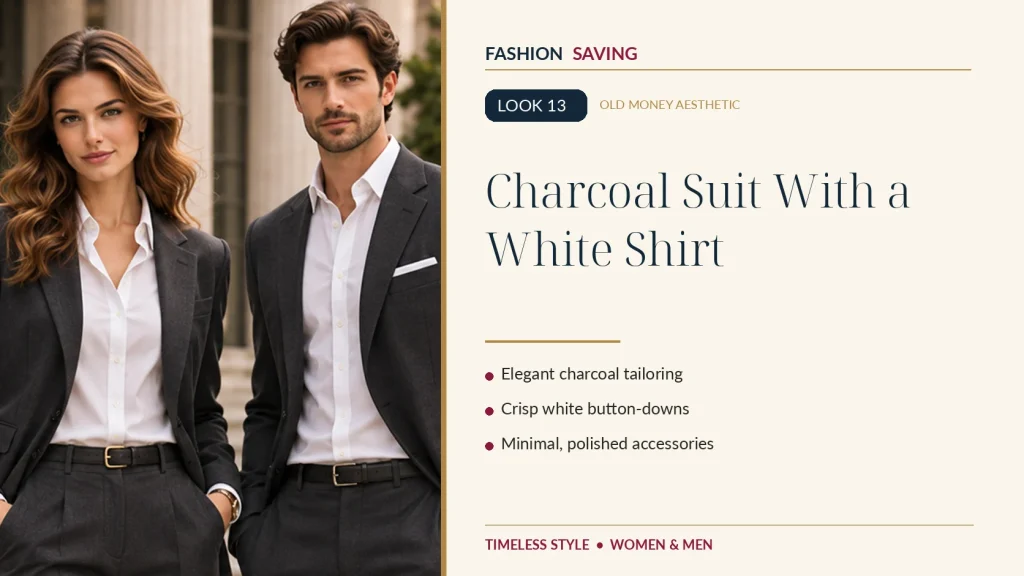
Best for: Business meetings, formal events, weddings, and professional occasions.
Outfit formula: Charcoal suit + white dress shirt + black leather shoes + understated watch.
Formal tailoring remains an important part of traditional old money style.
A charcoal suit provides a versatile foundation for occasions that require smarter clothing.
The jacket should sit naturally across the shoulders, while the trousers should allow movement without excessive bunching.
Add a tie when the occasion requires it.
Avoid choosing an overly tight suit solely to create a slim silhouette. Good tailoring should feel comfortable as well as look neat.
Budget styling tip: If you rarely attend formal events, one versatile suit may offer better value than purchasing several different styles.
14. White Linen Shirt With Tailored Shorts
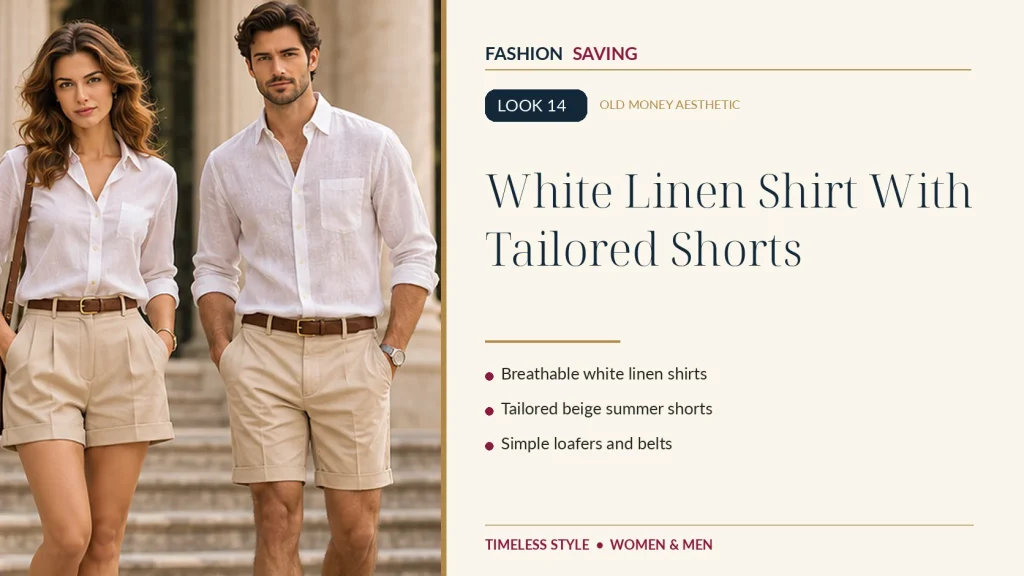
Best for: Summer holidays, resort settings, coastal weekends, and outdoor lunches.
Outfit formula: White linen shirt + beige tailored shorts + brown loafers or simple sandals.
This combination is inspired by relaxed summer dressing.
The shirt creates a clean foundation, while tailored shorts make the outfit more practical in hot weather.
Choose shorts with enough room through the thigh and a length that suits your proportions.
Roll the shirt sleeves for a relaxed appearance.
For slightly dressier occasions, replace the shorts with lightweight linen trousers.
Budget styling tip: Ordinary linen basics can create this look just as effectively as expensive resortwear.
15. Navy Turtleneck With a Camel Overcoat
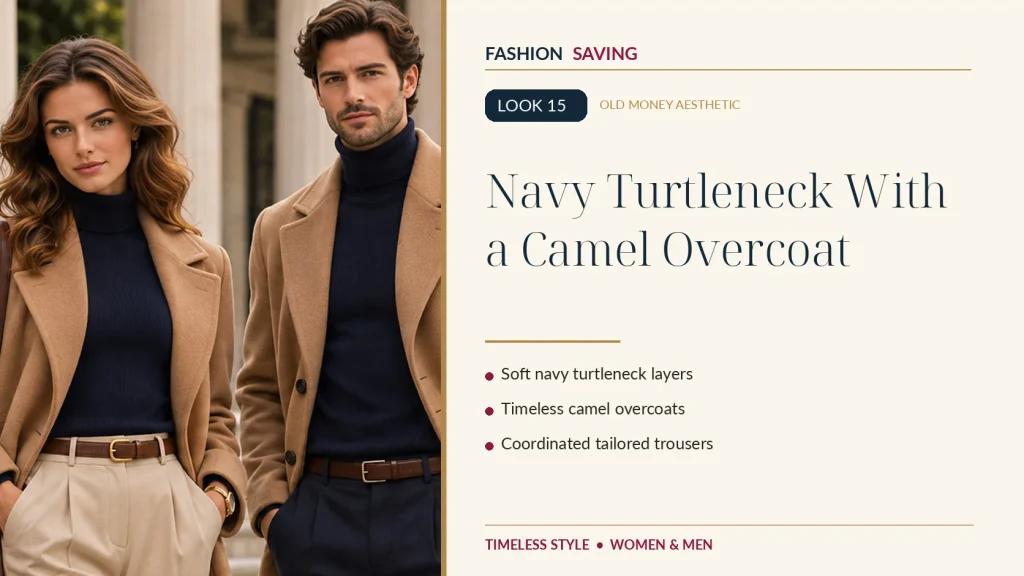
Best for: Winter dinners, professional events, evening outings, and cold-weather travel.
Outfit formula: Navy turtleneck + charcoal trousers + camel overcoat + dark leather boots.
A camel overcoat introduces a warm contrast against darker winter clothing.
The navy sweater and charcoal trousers create a coordinated base, allowing the coat to become the outfit’s focal point.
Choose a turtleneck that feels comfortable around your neck. If high collars aren’t your preference, a navy crewneck sweater can produce a similar result.
Finish with weather-appropriate leather boots and a simple scarf when needed.
Budget styling tip: If you already own a charcoal, navy, or brown overcoat, use that instead. An elegant outfit doesn’t depend on buying the exact color shown in an inspiration photograph.
How to Build an Old Money Capsule Wardrobe
An old money capsule wardrobe is a small, coordinated collection of classic clothing that can be mixed and matched to create multiple outfits.
The goal is versatility, not a particular number of garments.
Start With These 10 Wardrobe Essentials
| Essential | Recommended color | Why it’s useful |
| Button-down shirt | White | Works with jeans, trousers, skirts, and blazers |
| Second shirt | Light blue | Adds subtle color without reducing versatility |
| Fine-knit sweater | Cream | Suitable for layering and smart-casual outfits |
| Tailored trousers | Navy | Coordinates with most classic tops |
| Neutral trousers | Beige or charcoal | Provides an alternative to navy |
| Straight-leg jeans | Dark indigo | Useful for relaxed everyday outfits |
| Blazer | Navy | Makes simple clothing look more structured |
| Cardigan | Grey or cream | Adds warmth without formal tailoring |
| Classic coat | Camel, navy, or charcoal | Completes cooler-weather outfits |
| Additional staple | Dress, polo, or another useful piece | Adapts the wardrobe to personal needs |
Shoes, bags, and other accessories can be selected around these foundations.
The table is an example rather than a compulsory shopping list.
How Many Outfits Can You Make?
Even a small capsule wardrobe can provide several useful combinations.
Try these five:
- White shirt + navy trousers + loafers.
- Cream sweater + beige trousers + brown shoes.
- Light-blue shirt + dark jeans + navy blazer.
- White shirt + neutral trousers + cardigan.
- Fine-knit sweater + navy trousers + classic coat.
You can change the mood of each outfit through shoes, accessories, and layering.
Instead of asking how many new clothes to buy, ask how many ways you can wear the clothes you already have.
For everyday outfit planning beyond this aesthetic, our What to Wear Today guide includes practical combinations for different activities and weather conditions.
How to Achieve the Old Money Aesthetic on a Budget
You can achieve an old money-inspired look without designer brands by combining well-fitting wardrobe basics, choosing coordinated colors, shopping secondhand, and maintaining your clothing.
Expensive labels aren’t a substitute for good styling.
1. Shop Your Own Wardrobe Before Buying More
Start by collecting the classic pieces you already own.
Look for neutral shirts, tailored trousers, simple sweaters, structured jackets, and comfortable shoes.
Try pairing items you normally wear separately.
A cream sweater you usually wear with jeans may create a completely different outfit with charcoal trousers and loafers.
Sometimes the missing element is a new combination rather than a new purchase.
2. Build Around a Realistic Shopping Budget
If you’re working with a limited budget, prioritize the gaps that prevent you from creating useful outfits.
For example, suppose you have a hypothetical $150 clothing budget.
You might allocate it as follows:
| Item | Example budget |
| Secondhand blazer | $45 |
| Tailored trousers | $40 |
| Cotton shirt | $25 |
| Simple sweater | $30 |
| Care or minor alterations | $10 |
| Total | $150 |
These amounts are illustrative budget allocations, not verified current retail prices.
You may not need all four pieces. If your current wardrobe already contains a good blazer, that money could be better spent on footwear or alterations.
3. Explore Secondhand Shopping
Thrift stores, charity shops, consignment retailers, and resale platforms can offer opportunities to find classic wardrobe pieces.
In the USA, consider local thrift and consignment stores.
In the UK, charity shops and secondhand marketplaces can be useful starting points.
Before purchasing, check measurements, fabric composition, garment condition, and return policies.
Pay particular attention to the shoulders of tailored jackets and the condition of wool knitwear.
A bargain stops being useful when it requires expensive repairs or doesn’t fit.
4. Learn to Evaluate Clothing Quality
Good-quality clothing should suit its purpose, fit comfortably, and withstand appropriate care and regular use.
Check the stitching, buttons, seams, fabric, and garment labels.
Cotton, linen, wool, and synthetic blends can all be useful depending on the clothing.
Don’t assume every natural fiber is superior to every synthetic one. Construction and intended use also matter.
For US shoppers, the Federal Trade Commission’s apparel labeling guidance explains important requirements concerning fiber information and clothing care.
5. Consider Cost Per Wear
Cost per wear is a simple way to assess clothing value.
Cost per wear = Purchase price ÷ Number of times worn
For example:
- A $90 blazer worn 60 times costs $1.50 per wear.
- A $35 blazer worn five times costs $7 per wear.
These are illustrative examples and exclude costs such as maintenance, alterations, and repairs.
The lesson isn’t that expensive clothing is necessarily better. It’s that buying something you’ll genuinely wear often can offer better value than purchasing a cheaper item that stays in the wardrobe.
6. Maintain Your Existing Clothes
Clean shoes, properly stored knitwear, secure buttons, and pressed garments make a noticeable difference.
Follow care labels and repair minor issues before they become larger problems.
Buying less and wearing clothing longer can also help you avoid unnecessary purchases.
If you’re interested in the wider impact of shopping habits, read our guide to fast fashion and how it works.
You can also explore our guide to sustainable fashion brands for more information about evaluating fashion companies and their claims.
Old Money Aesthetic Outfits for Every Season
Old money clothing can be adapted to spring, summer, autumn, and winter by adjusting fabrics, layers, and footwear.
The core styling principles remain similar, but practical clothing choices should always reflect the weather.
Spring: Lightweight Layers and Soft Neutrals
Spring outfits work well with cotton shirts, fine-knit sweaters, trench coats, and tailored trousers.
Try: White shirt + navy trousers + beige trench coat + loafers.
Keep layers removable so you can adapt to changing temperatures throughout the day.
Summer: Linen, Cotton, and Relaxed Tailoring
Warm-weather outfits should prioritize breathable fabrics and comfortable silhouettes.
Try: Ivory linen shirt + beige relaxed trousers + leather sandals.
Lightweight dresses, cotton polos, and tailored shorts offer other practical options.
Avoid heavy jackets in hot or humid weather just to replicate a particular fashion photograph.
Autumn: Knitwear and Richer Colors
Autumn is particularly suited to fine-knit sweaters, cardigans, tailored jackets, and wool-blend trousers.
Try: Cream cable-knit sweater + navy trousers + brown loafers.
Burgundy, olive, and chocolate brown can introduce seasonal variety without abandoning a classic palette.
Winter: Structured Coats and Practical Layering
Winter outfits can combine warm knitwear, tailored trousers, and suitable coats.
Try: Camel overcoat + navy turtleneck + charcoal wool trousers + leather boots.
In colder climates, use insulating layers and weather-appropriate footwear.
The appearance of an outfit should never take priority over warmth, traction, or comfort.
How to Wear Old Money Outfits for Different Occasions
Classic clothing becomes more useful when you adapt it to different parts of your life.
| Occasion | Outfit for women | Outfit for men |
| Office | Tailored blazer, trousers, loafers | Oxford shirt, chinos, blazer |
| College | Cardigan, straight-leg jeans, flats | Sweater, chinos, comfortable shoes |
| Weekend brunch | Knit top, midi skirt, ballet flats | Knitted polo, tailored trousers |
| Dinner date | Black midi dress, understated accessories | Navy knit, trousers, leather shoes |
| Summer holiday | Linen shirt, relaxed trousers, sandals | Linen shirt, tailored shorts |
| Winter outing | Wool coat, cream knit, boots | Overcoat, sweater, wool trousers |
Treat these as outfit ideas, not substitutes for actual dress codes.
A formal wedding, corporate event, or religious occasion may have requirements that take priority over the aesthetic.
Old Money Accessories: Shoes, Bags, Jewelry, and Watches
Old money accessories are typically understated and practical, complementing the outfit without dominating it.
The best approach is to choose a few pieces that work with several clothing combinations.
Classic Shoes
Loafers, ballet flats, leather derbies, ankle boots, and understated heels can all complement this style.
Clean minimalist sneakers also work for modern casual interpretations.
Focus on comfort, maintenance, and suitability for the occasion.
Structured Handbags
Simple totes, shoulder bags, and crossbody bags in black, tan, brown, or cream are versatile options.
A bag should be large enough for your daily essentials without feeling impractical to carry.
Jewelry and Watches
Small earrings, delicate necklaces, understated watches, and simple bracelets can add a polished finish.
Pearls are a traditional styling reference, but they aren’t essential.
Mixing gold and silver jewelry is also perfectly reasonable when the combination feels intentional.
Belts, Scarves, and Sunglasses
A leather belt can help coordinate shoes and trousers.
Scarves introduce texture and color, while sunglasses can provide both practical protection and a finishing detail.
If your outfit already includes a statement coat or patterned sweater, you may need fewer accessories.
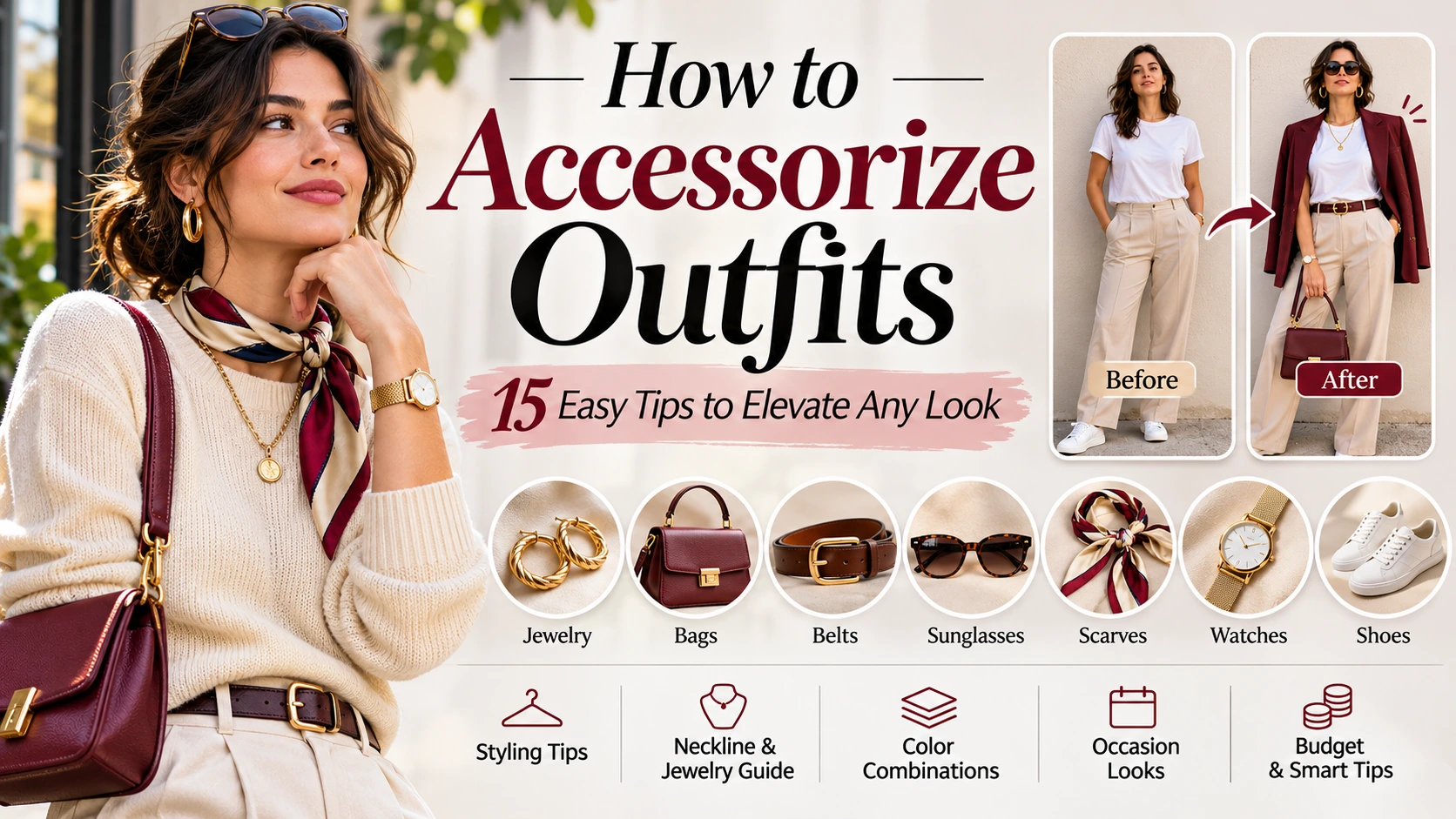
For more ways to balance jewelry, handbags, shoes, and other details, see our 15 practical tips for accessorizing outfits.
Common Old Money Styling Mistakes to Avoid
Understanding what doesn’t work can be just as useful as knowing which clothes to choose.
Wearing Poorly Fitting Clothing
A blazer that’s too tight across the shoulders or trousers that drag on the floor can disrupt an otherwise coordinated outfit.
Better approach: Check fit while standing, sitting, and moving. Consider straightforward alterations when they make financial sense.
Assuming Everything Must Be Expensive
Designer clothing isn’t a requirement for classic style.
Better approach: Evaluate garments by their fit, construction, comfort, and versatility rather than the label.
Wearing Only Beige
Neutral clothing is useful, but dressing entirely in beige can feel limiting.
Better approach: Experiment with navy, brown, charcoal, olive, burgundy, and shades that complement your complexion.
Combining Too Many Statement Pieces
Large jewelry, dramatic footwear, a heavily patterned bag, and bold outerwear can compete for attention.
Better approach: Let one element provide the main visual interest and keep the remaining accessories more restrained.
Ignoring Weather and Comfort
Heavy wool and multiple layers may look elegant in photographs but become uncomfortable in warm climates.
Better approach: Adapt the silhouette using lightweight cotton, linen, and breathable fabrics.
Copying an Outfit Without Adapting It
An outfit that looks excellent on someone else may not suit your proportions, activities, or personal preferences.
Better approach: Borrow the color combination or styling principle, then adjust the fit and pieces to make it your own.
What Social Media Gets Wrong About Old Money Fashion
Social media often portrays the old money aesthetic through luxury estates, private clubs, vintage cars, and expensive holiday destinations.
These images can be visually appealing, but they don’t provide a complete picture of how wealthy families dress.
Fashion varies across countries, generations, lifestyles, and personal preferences.
In its examination of modern fashion aesthetics, Vogue describes old money style as a romanticized interpretation of wealthy people’s private wardrobes, with strong connections to earlier preppy fashion.
That distinction matters.
Wearing a navy blazer doesn’t indicate inherited wealth, just as owning designer clothing doesn’t automatically demonstrate good taste.
You can appreciate tailored trousers, classic knitwear, and understated accessories without treating financial status as a measure of personal style.
Is the Old Money Aesthetic Still Popular in 2026?
The old money aesthetic remains a recognizable fashion reference in 2026, although its online popularity has evolved alongside quiet luxury, modern preppy fashion, and other minimalist styles.
Its most practical elements aren’t dependent on short-lived trends.
White shirts, tailored trousers, knitwear, and well-fitting coats have remained useful across many periods of fashion.
That doesn’t mean every individual piece will stay fashionable forever. Silhouettes, cuts, and styling preferences continue to change.
The advantage of this aesthetic is that you can adapt its principles without replacing your entire wardrobe whenever a new trend appears.
Frequently Asked Questions About the Old Money Aesthetic
What does the old money aesthetic mean?
The old money aesthetic is a fashion style inspired by traditional upper-class dressing, classic tailoring, preppy clothing, and understated luxury. It commonly features neutral colors, well-fitting garments, minimal branding, and versatile wardrobe essentials.
How do you dress in the old money aesthetic?
Start with classic basics such as a white shirt, tailored trousers, a neutral sweater, and a structured blazer. Coordinate two or three colors, choose comfortable shoes, and add restrained accessories. Focus on fit and outfit balance rather than expensive labels.
What are the essential pieces for an old money wardrobe?
Common essentials include Oxford shirts, navy blazers, tailored trousers, fine-knit sweaters, classic coats, loafers, and simple accessories. You don’t need every piece; choose those suited to your climate, activities, and preferences.
How can I achieve the old money look on a budget?
Use clothing you already own, choose coordinated neutral colors, shop secondhand, and prioritize fit. A clean cotton shirt, well-fitting trousers, and maintained shoes can create an elegant outfit without designer purchases.
What colors define old money style?
Navy blue, cream, ivory, beige, camel, grey, chocolate brown, and black are common choices. Burgundy, forest green, olive, and muted blue can also complement the aesthetic.
Can you wear jeans with old money outfits?
Yes. Dark-wash or clean-cut straight-leg jeans work well with navy blazers, cotton shirts, cardigans, fine-knit sweaters, and loafers. Choose denim that suits the occasion and feels comfortable.
What’s the difference between old money and quiet luxury?
Old money fashion draws more noticeably from traditional preppy clothing and heritage-inspired tailoring. Quiet luxury generally focuses on contemporary minimalist design, understated materials, and discreet details.
Can you wear sneakers with the old money aesthetic?
Yes. Simple, clean sneakers can work with modern casual interpretations, especially when paired with chinos, tailored trousers, or straight-leg jeans. They may not suit occasions requiring formal footwear.
Is the old money aesthetic suitable for summer?
Yes. Lightweight cotton, linen shirts, relaxed trousers, tailored shorts, and simple dresses can recreate the look in warm weather. Choose breathable clothing rather than heavy layers.
What hairstyles complement old money outfits?
Low buns, natural waves, simple ponytails, neatly styled short hair, and other understated hairstyles can all work. There’s no required haircut, hair texture, or grooming routine for this aesthetic.
Do you need designer brands to dress old money?
No. Classic clothing, coordinated colors, good fit, and appropriate garment care are more useful than designer labels when recreating the aesthetic.
Is old money fashion the same as preppy style?
They overlap considerably. Both use Oxford shirts, knitwear, loafers, blazers, and classic trousers. Preppy fashion often has a sportier or more colorful character, while modern old money styling commonly emphasizes a more restrained palette.
Can men and women wear the same old money wardrobe pieces?
Yes. Blazers, knitwear, Oxford shirts, tailored trousers, loafers, and classic coats can work across different wardrobes. Choose the fit, colors, and styling details that suit you.
How do you make old money outfits look modern?
Combine classic clothing with contemporary proportions and practical footwear. For example, try a relaxed navy blazer over a plain T-shirt and straight-leg jeans, or pair a fine-knit sweater with modern wide-leg trousers.
Can you mix old money style with other aesthetics?
Absolutely. Classic tailoring can work with minimalist clothing, dark academia, modern casual outfits, and other styles. Combining elements selectively often creates a more personal wardrobe than copying one aesthetic exactly.
Final Thoughts: Timeless Style Doesn’t Require Old Money
The appeal of the old money aesthetic isn’t really about expensive clothing. It’s about understanding how simple pieces, coordinated colors, good proportions, and thoughtful accessories can create outfits that feel polished.
You don’t need to replace your entire wardrobe or follow every styling rule you see online.
Start with one of the 15 outfit combinations in this guide. Use what you already own, experiment with different layers, and pay attention to how your clothes fit and work together.
Over time, you’ll discover which pieces suit your lifestyle and which purchases are genuinely worth making.
The result should feel like your own style, not an attempt to recreate someone else’s wardrobe.
For more inspiration beyond classic tailoring, explore our guide to aesthetic outfits and discover other wearable styles you can adapt to your everyday life.