You put together a great outfit, look in the mirror, and feel like something is missing. The clothes fit, the colors work, and the shoes are comfortable, but the overall look still feels a little plain.
Often, the answer isn’t buying something new. It’s learning how to accessorize outfits with the right finishing touches.
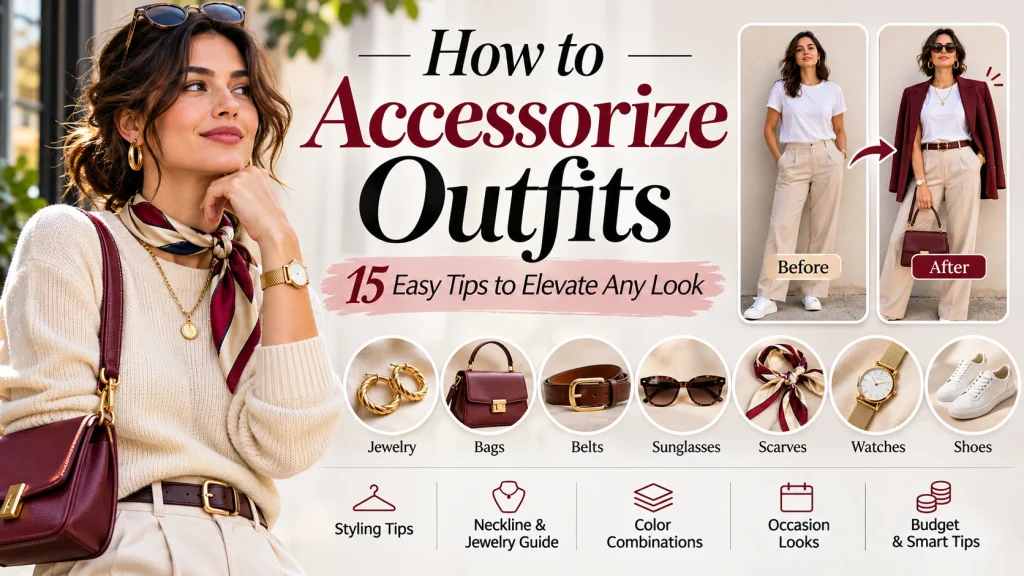
To accessorize an outfit, start with your clothes, choose one focal accessory, and add complementary pieces that suit the colors, proportions, and occasion. A simple necklace, structured handbag, stylish belt, or pair of earrings can make even familiar wardrobe basics feel more intentional.
The best part? You don’t need expensive jewelry or an overflowing accessory collection to look put together.
In this guide, you’ll discover 15 practical styling tips, color-matching ideas, jewelry recommendations, outfit combinations, and simple fashion rules to help you accessorize confidently.
What Does It Mean to Accessorize an Outfit?
Accessorizing means adding complementary items to your clothing to enhance its appearance, express your personal style, or make it more suitable for an occasion.
Fashion accessories include jewelry, handbags, belts, scarves, sunglasses, hats, watches, hair accessories, and footwear.
Think of a plain white T-shirt and blue jeans. On their own, they create a classic casual outfit. Add gold hoop earrings, a brown leather belt, loafers, and a coordinating handbag, and the same clothes become a more polished daytime look.
Replace the loafers with heels and the everyday bag with a small clutch, and the outfit becomes more appropriate for an evening out.
The clothing hasn’t changed. The accessories have changed how the entire outfit feels.
Why Are Accessories Important in Fashion?
Accessories can serve several styling purposes:
- Create a focal point: Statement earrings or a colorful bag attract attention.
- Add personality: Vintage jewelry, patterned scarves, or distinctive sunglasses communicate individual style.
- Improve visual balance: A belt, necklace, or structured bag can complement the proportions of an outfit.
- Change the mood: Sneakers make a dress feel relaxed, while elegant heels can create a dressier appearance.
- Extend your wardrobe: Different combinations make familiar clothing look fresh.
You can also use accessories to explore different fashion aesthetics. Our guide to aesthetic outfits offers inspiration for creating looks that reflect your individual preferences.
How to Accessorize an Outfit in 5 Simple Steps
If you’re a beginner, you don’t need to memorize complicated styling rules. Follow this five-step approach whenever you’re unsure what accessories to wear.
Step 1: Look at Your Outfit Before Adding Accessories
Start by identifying the colors, shapes, patterns, and textures you’re already wearing.
Is your outfit minimalist or detailed? Relaxed or structured? Neutral or colorful?
A plain black dress leaves room for a statement necklace or dramatic earrings. A floral dress with ruffles, meanwhile, may already have enough visual interest and need only subtle accessories.
Step 2: Consider Where You’re Going
Accessories should work with the occasion.
A canvas tote and comfortable sneakers might be perfect for a casual shopping trip. A structured handbag and understated jewelry may feel more appropriate for an office setting.
For a wedding or formal event, consider the dress code, venue, and overall level of formality.
Step 3: Choose Your Main Accessory
Select one item you want people to notice first.
It might be an oversized necklace, a colorful handbag, a statement belt, or distinctive shoes.
This becomes your focal accessory. The other pieces can support it without competing for attention.
Step 4: Add Complementary Details
Once you’ve chosen your main piece, add smaller accessories that create a connection.
For example, a burgundy handbag could work beautifully with gold earrings, black loafers, and a beige trench coat.
Everything doesn’t need to match. A shared color, texture, or overall mood is often enough.
Step 5: Check the Overall Balance
Before leaving, look at your outfit from head to toe.
Does one area feel overcrowded? Are your accessories comfortable? Does the outfit suit your plans?
If something feels distracting, remove it or replace it with a simpler alternative. If the look seems unfinished, try adding one purposeful detail.
The goal is balance, not wearing as many accessories as possible.
15 Easy Tips to Accessorize Outfits Like a Stylist
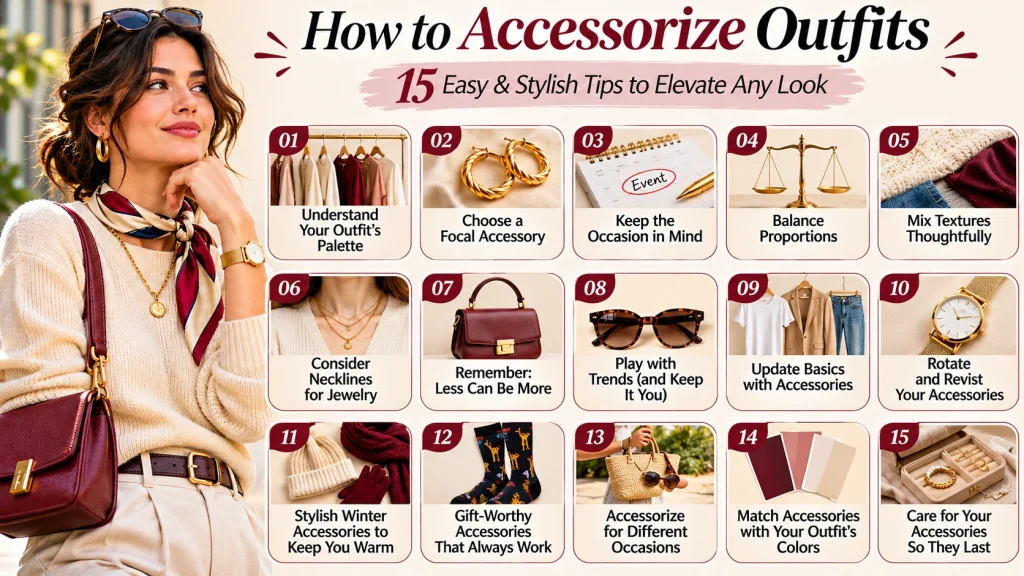
These styling techniques can help you make better accessory choices whether you’re getting dressed for work, meeting friends, attending a party, or simply running errands.
1. Choose One Statement Accessory
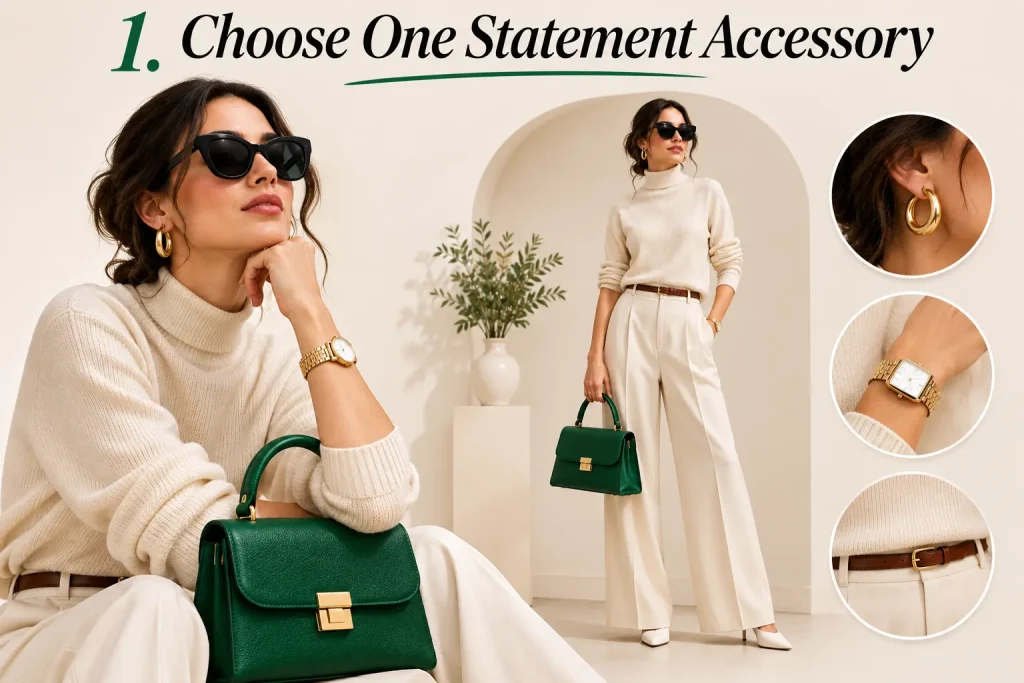
A statement accessory is a distinctive piece that draws attention through its size, color, shape, or design.
It could be a chunky necklace, oversized earrings, sculptural bracelet, brightly colored handbag, or patterned scarf.
Statement pieces work particularly well with understated clothing.
Outfit example: Wear a cream knit sweater, black tailored trousers, and simple flats with a bold emerald-green handbag.
The handbag adds interest without requiring multiple decorative pieces.
If you prefer an expressive look, you can wear several statement accessories together. Just consider their placement and whether they contribute to the same visual idea.
2. Add a Pop of Color to Neutral Outfits
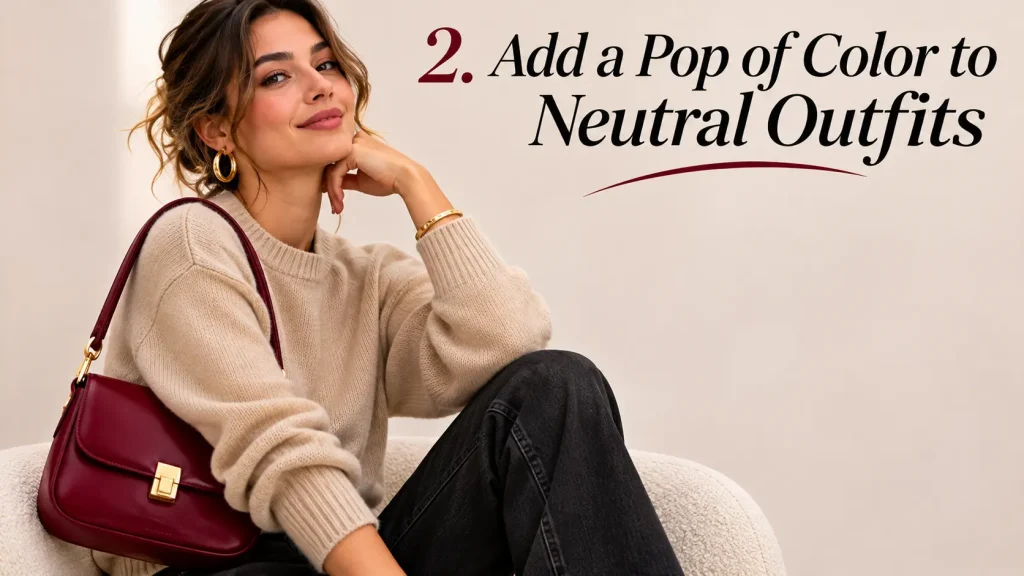
Neutral outfits provide an easy foundation for experimenting with accessories.
Black, white, gray, beige, brown, and navy can work with a wide range of accent colors.
Try a red handbag with a black-and-white outfit, cobalt-blue shoes with cream trousers, or a colorful scarf with a beige coat.
Beginner tip: Start with one colorful accessory rather than introducing several unrelated bright shades.
For example, a beige sweater, black jeans, and burgundy shoulder bag create a coordinated look without being overly matched.
3. Coordinate Accessories Without Matching Everything
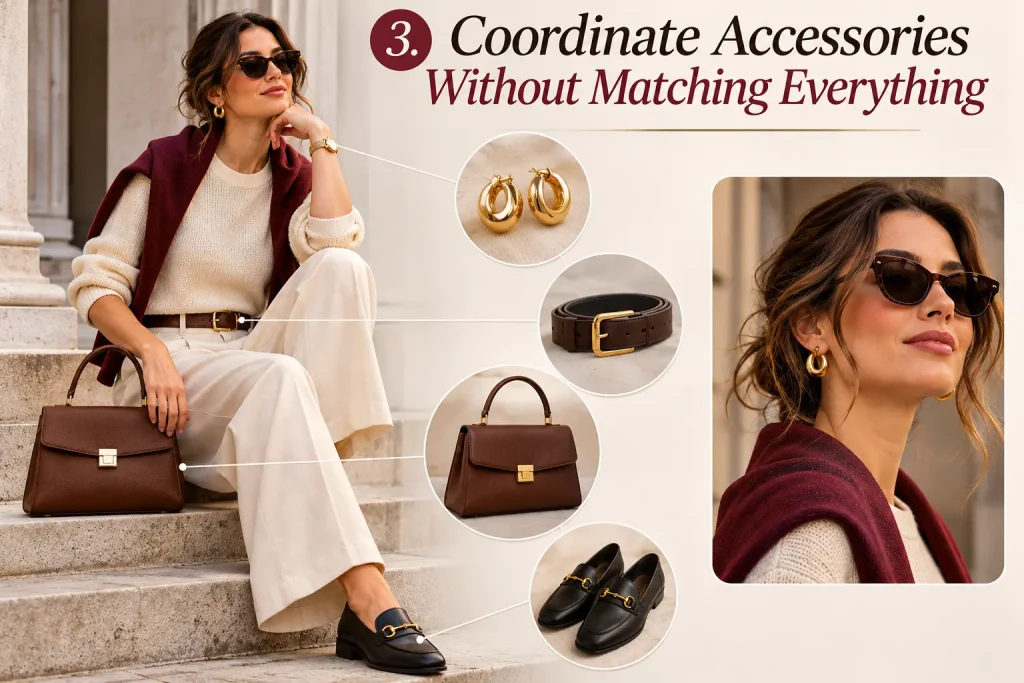
Your handbag, shoes, belt, and jewelry don’t have to be identical.
Matching every piece can create a classic appearance, but subtle differences often make an outfit feel more interesting.
Instead of wearing a black bag, black shoes, black belt, and black jewelry, introduce a related texture or complementary color.
Try black loafers, a chocolate-brown handbag, a dark leather belt, and gold earrings.
The combination feels connected while allowing each accessory to contribute something different.
4. Keep Accessories Balanced With Bold Prints
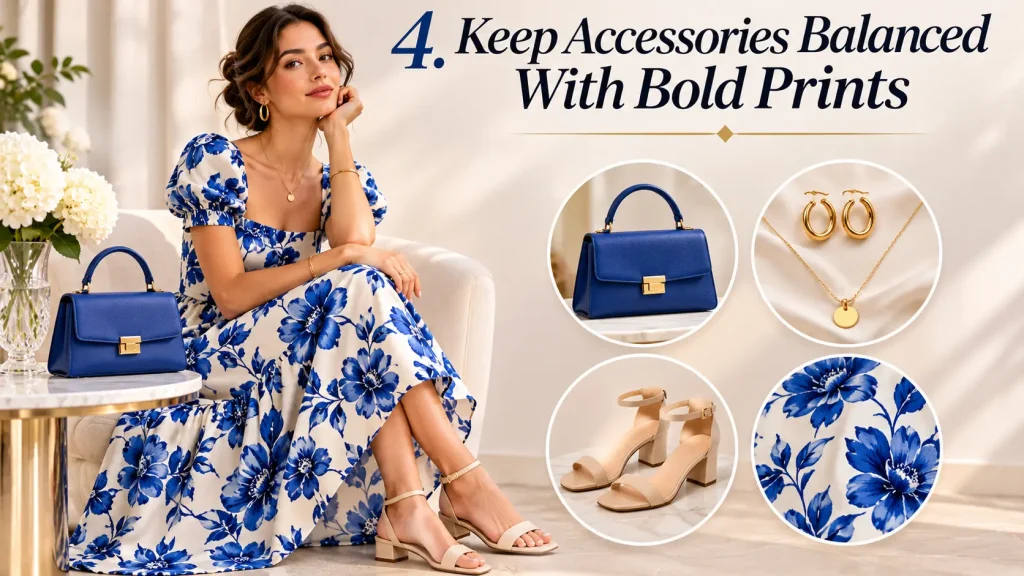
Printed clothing already adds visual detail to an outfit.
If you’re wearing a floral dress, striped shirt, animal-print skirt, or geometric blouse, pay attention to how accessories interact with the pattern.
A simple method is to choose one color from the print and repeat it in an accessory.
For example, a blue-and-white floral dress could work with a blue handbag, neutral sandals, and silver jewelry.
If you enjoy maximalist styling, mixing patterns and bold accessories can also work. Repeating a color or motif helps create cohesion.
5. Match Your Necklace to Your Neckline
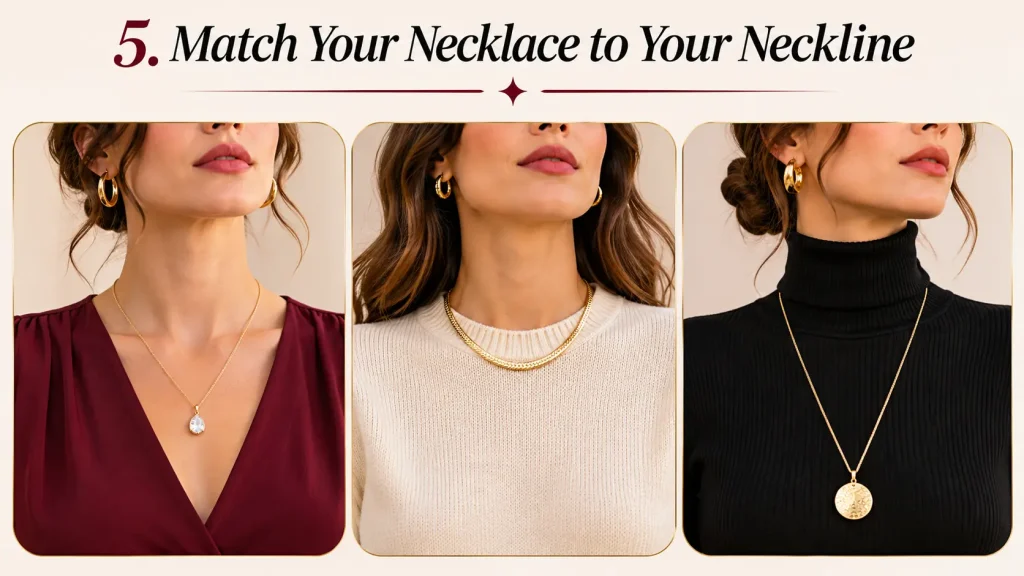
One of the easiest ways to improve jewelry styling is to consider your neckline.
Different necklines create different spaces for necklaces to sit.
A V-neck often looks balanced with a pendant that follows the shape of the neckline. A crew-neck top can work with a short necklace resting above the fabric or a longer chain extending below it.
For a high-neck blouse or turtleneck, consider a long pendant, layered chains, or statement earrings instead.
Practical tip: Check where your necklace actually falls when you’re wearing the outfit. A beautiful necklace may still look awkward if its pendant sits directly across a neckline seam.
6. Mix Gold and Silver Jewelry With Intention
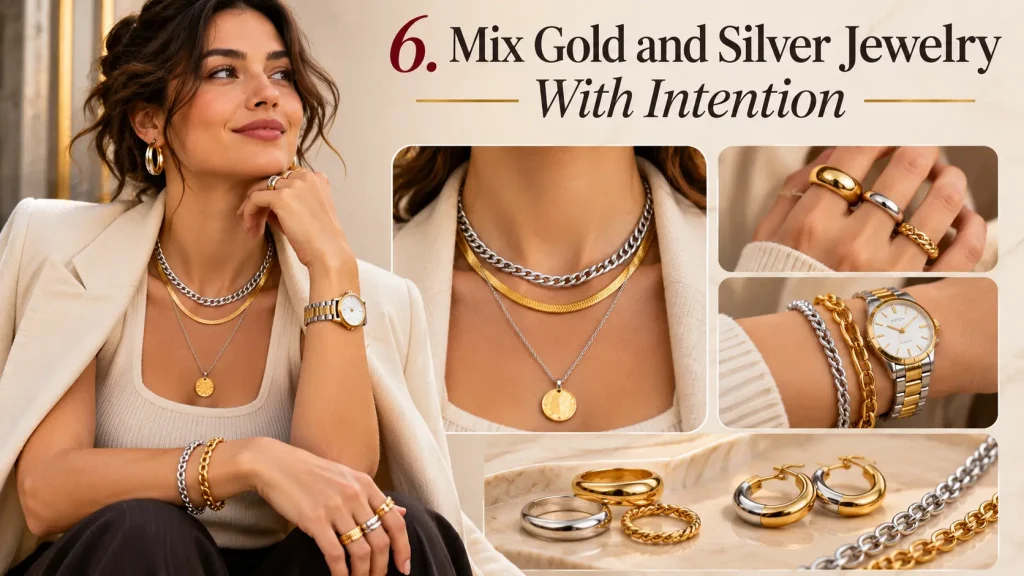
You don’t have to choose between gold and silver jewelry.
Mixing metals can give an outfit a modern, layered appearance.
Start with a dominant metal and introduce a smaller amount of the second. For example, wear a gold necklace with gold hoops and add a silver watch or ring.
Another approach is to choose a piece that already combines both metals, creating a visual connection.
There’s no universal rule that gold only suits warm undertones or silver only suits cool undertones. Contrast, personal preference, and the colors of your outfit matter too.
7. Balance Statement Earrings With Other Jewelry
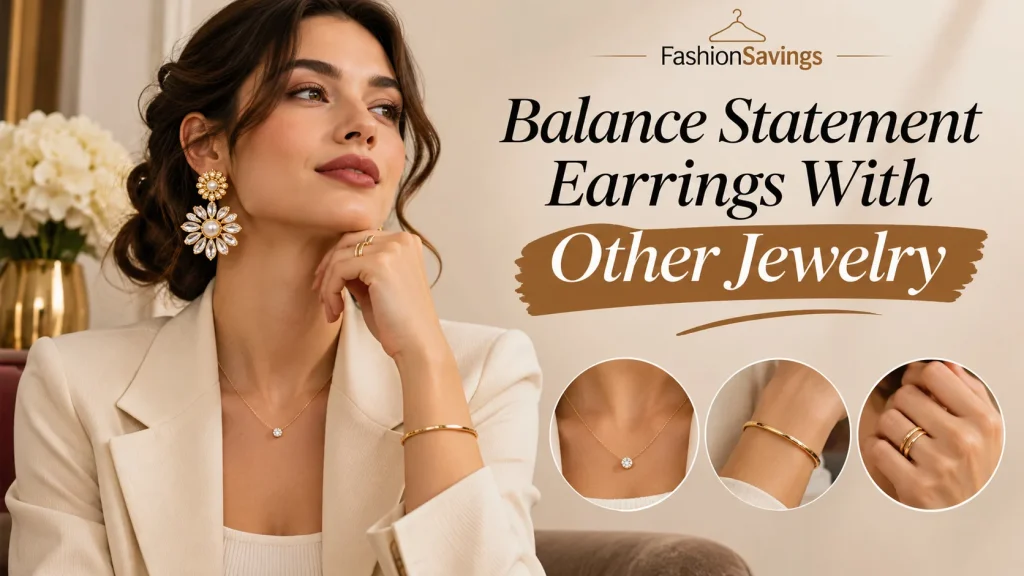
Large earrings can become the main feature of an outfit, especially when your hair is pulled back.
Sculptural earrings, oversized hoops, or colorful drop earrings can transform a plain top without needing a necklace.
Try a black turtleneck, tailored trousers, and bold gold earrings for an elegant minimalist look.
You can still add a small ring or bracelet, but don’t feel obligated to fill every available space with jewelry.
For days when you prefer understated accessories, small hoops or studs provide a quieter alternative.
8. Use Shoes to Change the Mood of Your Outfit
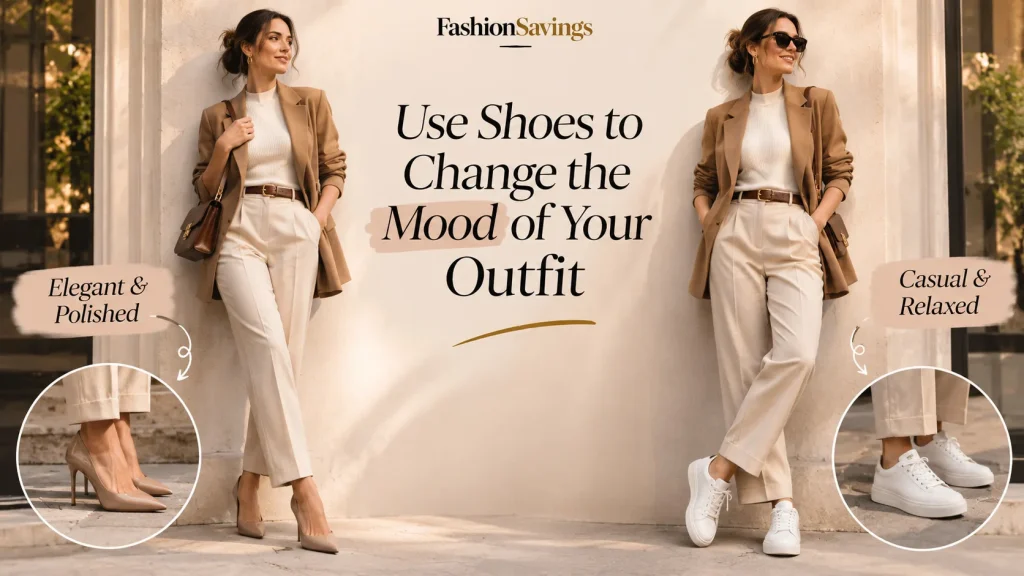
Shoes can dramatically change how formal or relaxed clothing appears.
Consider a simple midi dress.
With white sneakers, it feels casual and practical. With ballet flats, it becomes softer and more polished. With heeled sandals, it may be suitable for a dressier occasion.
The same principle applies to denim.
Straight-leg jeans and a white shirt feel different with trainers, loafers, ankle boots, or pointed-toe heels.
Choose shoes that suit your outfit’s mood, but don’t ignore comfort, weather conditions, or how far you’ll be walking.
9. Choose a Handbag That Complements Your Outfit
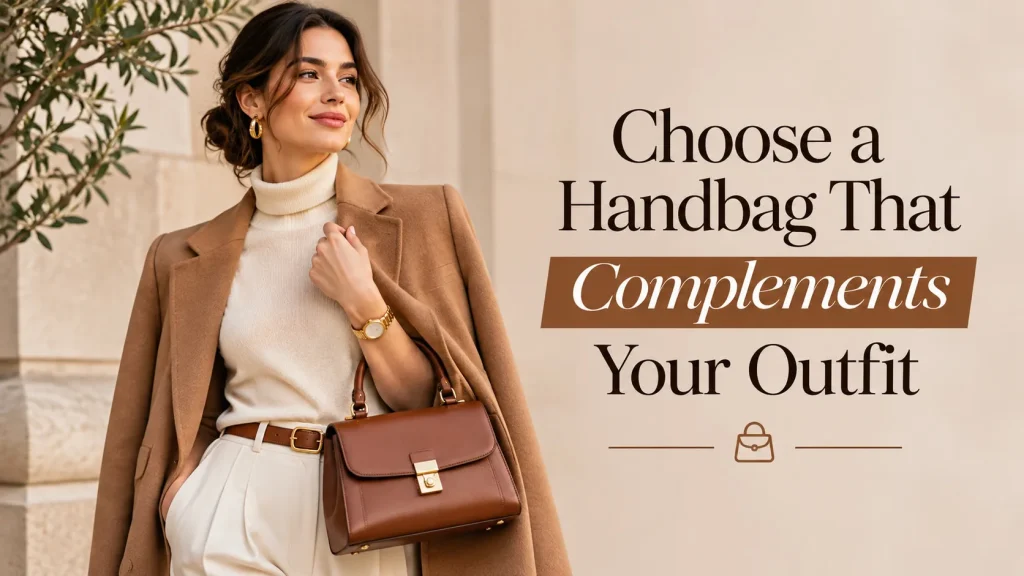
A handbag is both a practical necessity and an important styling element.
Its shape, size, color, and material can affect the overall look.
Structured handbags often work well with tailored outfits, while slouchy shoulder bags can complement relaxed denim, knitwear, and casual dresses.
A small clutch may suit an evening event, while a spacious tote is more practical for a busy day.
Outfit example: Pair wide-leg trousers, a fitted knit top, loafers, and a medium structured shoulder bag for a balanced daytime look.
Don’t choose a tiny handbag solely for appearances if you need to carry more than it can hold.
10. Add a Belt for Shape and Definition
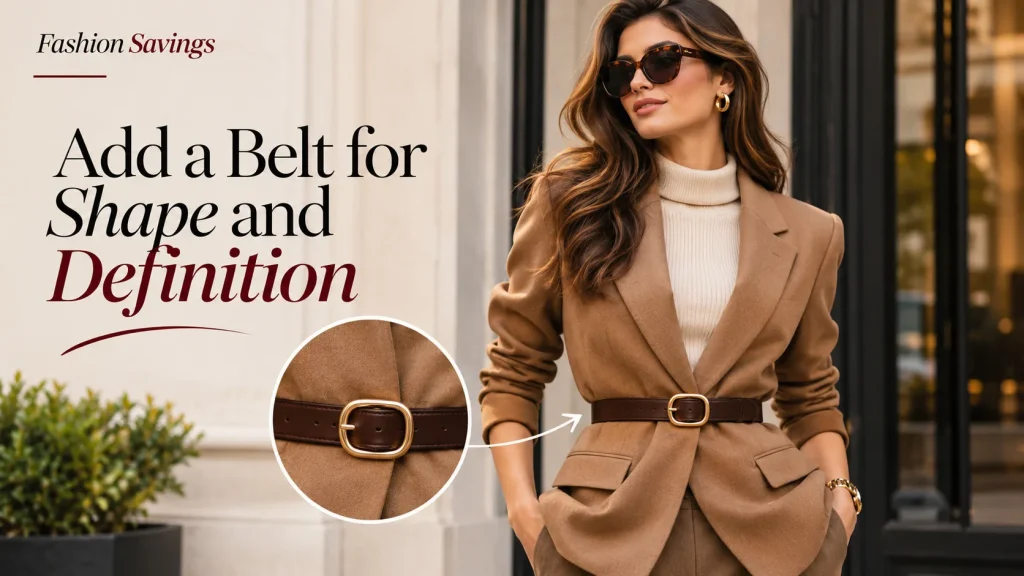
A belt can do more than keep trousers in place.
It introduces structure, highlights the waist, or adds a contrasting texture to an outfit.
A brown leather belt works beautifully with blue jeans and a white shirt. A slim black belt can complement tailored trousers, while a statement buckle can become the focal point of a simple dress.
Belts are particularly useful when styling relaxed clothing.
For example, a loose shirt dress may look completely different when styled with a waist belt.
However, not every outfit needs one. Some oversized or flowing silhouettes look better without a defined waist.
11. Experiment With Scarves, Hats, and Hair Accessories
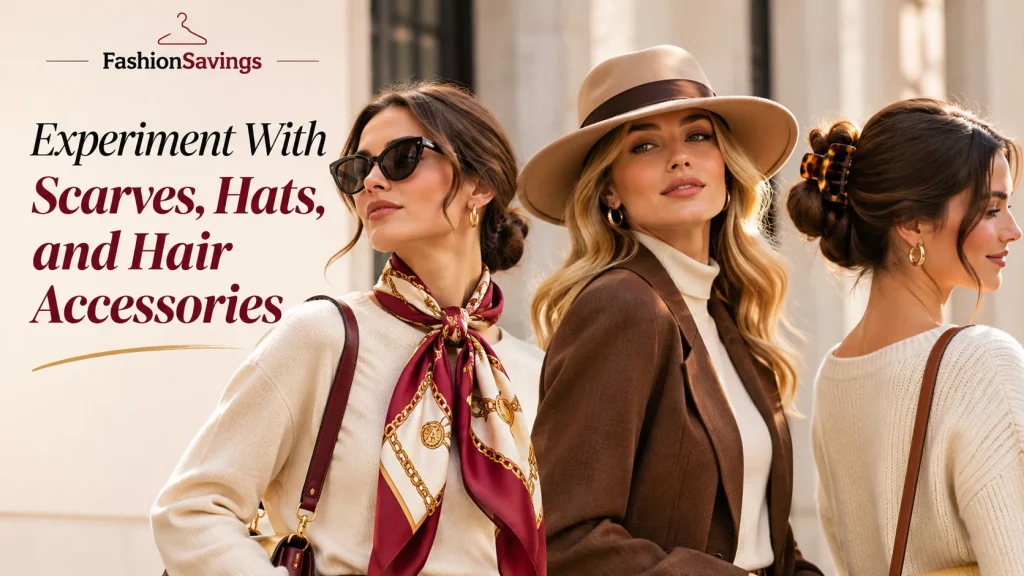
Accessories aren’t limited to jewelry.
A scarf, headband, hair clip, hat, or pair of sunglasses can introduce personality without changing the rest of your clothes.
A lightweight scarf can be tied around your neck, used as a hair accessory, or secured around a handbag handle.
A silk scarf can also work as a belt when the fabric and fit allow it.
For a casual weekend look, try a striped top, straight-leg jeans, loafers, and a scarf tied around your ponytail.
These small styling details can create a recognizable personal aesthetic.
12. Balance Oversized and Delicate Accessories
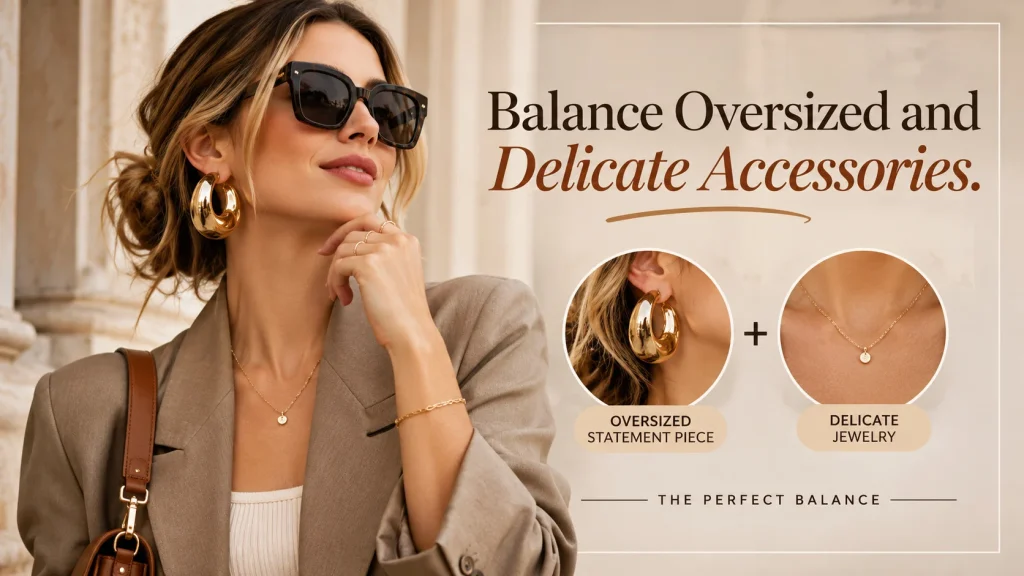
The visual scale of your accessories matters.
Chunky knitwear, structured coats, and heavier fabrics can support bold jewelry or substantial handbags. Lightweight summer dresses may feel more harmonious with delicate necklaces and smaller accessories.
But contrast can also be effective.
A chunky bracelet against a simple sleeveless dress, for example, creates an intentional statement.
The key is to notice whether an accessory disappears into the outfit or dominates it more than you intended.
13. Mix Textures to Add Depth
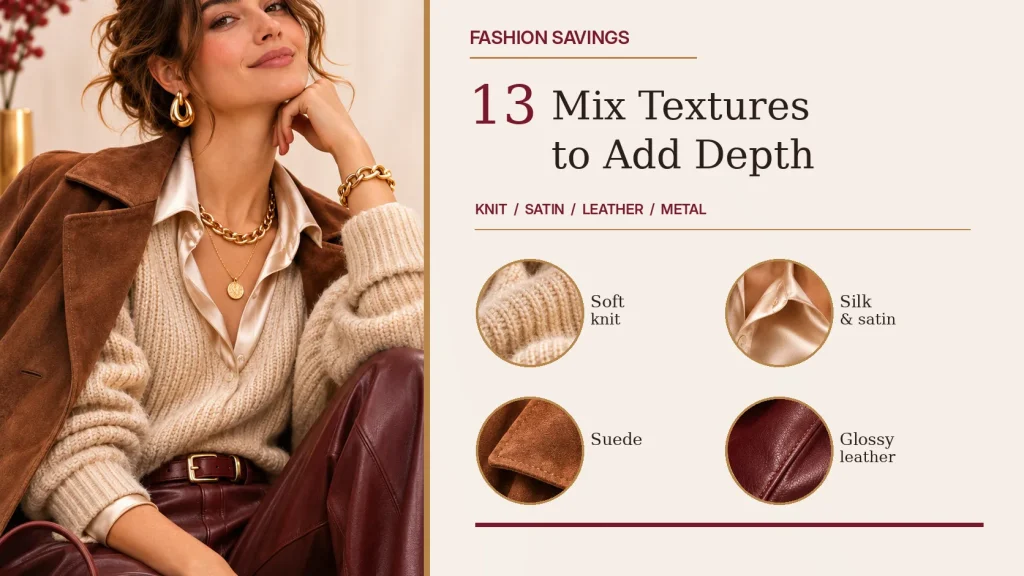
Texture makes a neutral outfit more visually interesting.
Think of combining smooth leather, soft knitwear, polished metal, suede, or a lightly patterned scarf.
An outfit featuring a cream sweater, charcoal trousers, brown leather bag, and gold jewelry has several textures even though its colors are understated.
This technique is especially effective for vintage-inspired styles.
For more inspiration, explore our dark academia fashion guide, where tailored pieces, knitwear, and classic accessories contribute to a distinctive aesthetic.
14. Transform Daytime Outfits Into Evening Looks
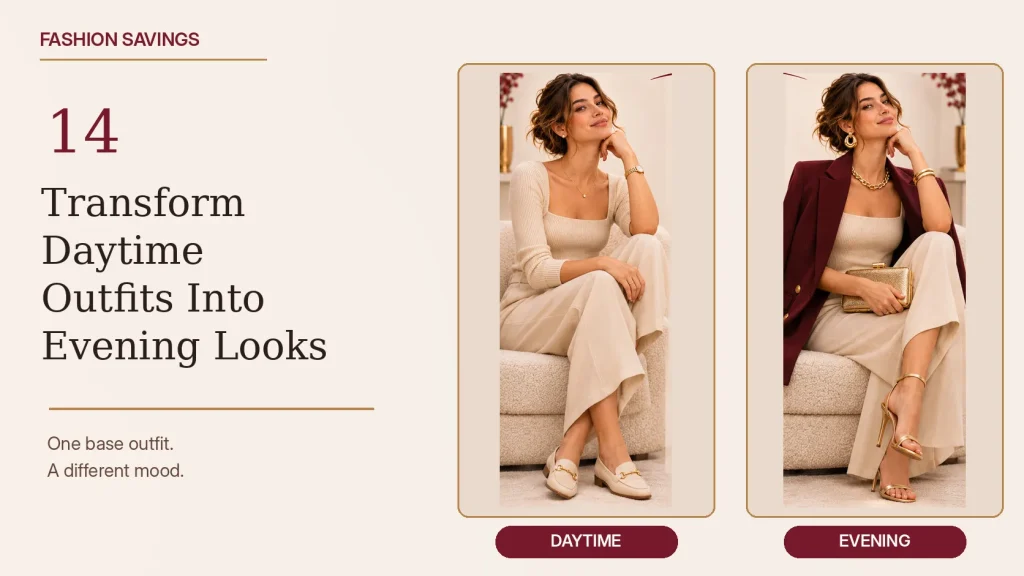
You don’t necessarily need an entirely new outfit for an evening event.
Sometimes, changing two or three accessories is enough.
Imagine you’re wearing a black midi dress, simple flats, and an everyday shoulder bag.
For an evening look, replace the flats with dressier shoes, switch the bag for a clutch, and add statement earrings.
The dress remains the same, but the overall appearance changes.
This approach is especially useful for travel, after-work dinners, or days when you don’t have time for a complete outfit change.
15. Restyle Accessories You Already Own
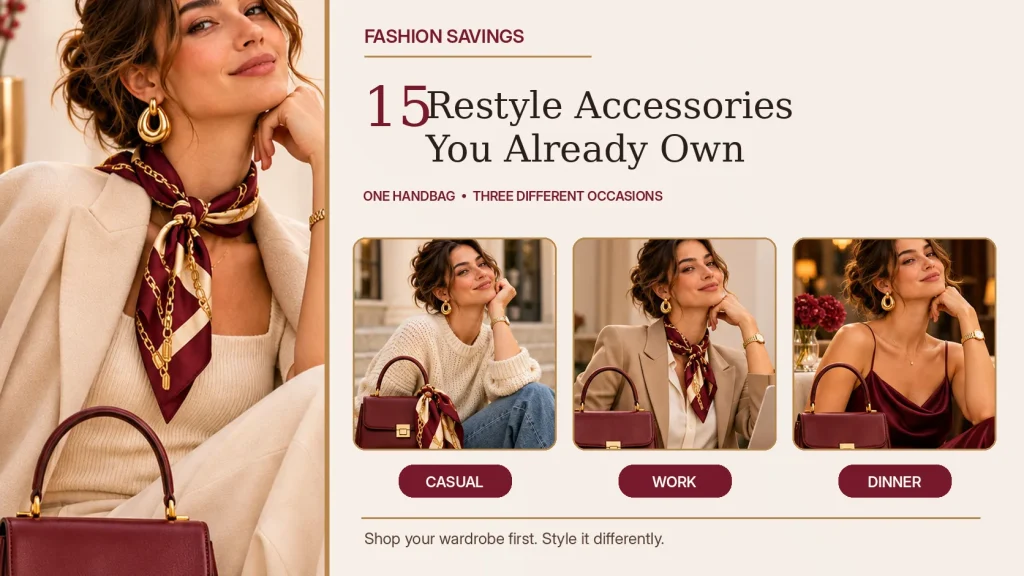
Before shopping for new accessories, explore what you already have.
Take out your scarves, belts, jewelry, bags, and sunglasses. Try combining them with outfits you normally wear without accessories.
A scarf you usually wear around your neck might work tied around a handbag. An evening necklace might look unexpectedly good with a plain T-shirt.
You may discover several new looks without spending anything.
This is also an opportunity to understand your personal style instead of constantly replacing accessories to follow trends.
How to Match Accessories With Your Outfit Colors
Color coordination is one of the most common challenges when learning how to accessorize outfits.
The good news is that you don’t need advanced color theory.
Start with your outfit’s dominant color, then decide whether you want your accessories to blend in or create contrast.
Accessory Color Combinations That Work
| Outfit color | Accessory combination | Overall effect |
| Black | Gold earrings + burgundy bag | Rich and sophisticated |
| White | Tan belt + gold jewelry | Warm and classic |
| Beige | Chocolate-brown bag + cream shoes | Soft and coordinated |
| Navy | Cognac bag + silver watch | Smart and understated |
| Gray | Black boots + red scarf | Modern with a bold accent |
| Olive green | Brown bag + warm metallic jewelry | Earthy and relaxed |
| Pastel pink | Cream bag + delicate silver jewelry | Soft and feminine |
| Floral print | Neutral shoes + a bag matching one print color | Balanced and cohesive |
These combinations are starting points, not mandatory rules.
How to Accessorize an All-Black Outfit
All-black outfits offer a versatile background for accessories.
For a minimalist approach, choose silver earrings, black loafers, and a structured black bag. The variation in shapes and textures keeps the outfit interesting.
For a bolder look, introduce a red handbag, gold jewelry, or patterned scarf.
You can also combine different black textures, such as denim, leather, cotton, and knitwear.
How to Accessorize White and Cream Outfits
White and cream clothing work beautifully with tan, brown, navy, black, and metallic accessories.
Try a white linen dress, woven handbag, flat sandals, and gold hoops for a relaxed summer look.
For a sharper combination, wear a white shirt with black tailored trousers, a black belt, loafers, and simple jewelry.
How to Accessorize Bright or Patterned Outfits
When your clothing already features bright colors, decide which element you want to emphasize.
If the outfit is the statement, neutral accessories create balance. If you’re aiming for a more expressive style, a contrasting accessory can add excitement.
For instance, a cobalt-blue dress with orange earrings creates a vibrant contrast, while a cream handbag and neutral sandals create a calmer look.
How to Choose Jewelry for Different Necklines
The relationship between your neckline and jewelry can make a significant difference to an outfit.
Here’s a practical reference guide.
| Neckline | Jewelry to try | Styling consideration |
| V-neck | V-shaped pendant or layered chains | Keep the pendant clear of the neckline edge |
| Crew neck | Short necklace or longer chain | Avoid an awkward overlap with the collar |
| Turtleneck | Long pendant or statement earrings | Match the jewelry’s scale to the knit |
| Strapless | Choker, short necklace, or bold earrings | Use the open neckline as a focal area |
| Off-shoulder | Delicate necklace or statement earrings | Avoid crowding both shoulders and neckline |
| Button-down shirt | Pendant inside an open collar | Coordinate with the shirt’s structure |
| Embellished neckline | Earrings or bracelet | Let existing details remain visible |
Best Jewelry for a V-Neck Top
A V-neck naturally creates a downward line.
A teardrop pendant or delicate chain following that shape can enhance the neckline.
For a white V-neck T-shirt, try a simple gold pendant, small hoops, blue jeans, and a tan belt.
If the neckline is deep, consider where the pendant falls and whether the combination feels appropriate for the occasion.
Best Accessories for Crew-Neck Tops
Crew-neck tops work well with short necklaces that sit above the neckline or longer chains that fall clearly below it.
A necklace resting directly on the collar edge can sometimes create an awkward visual break.
If you’re wearing a printed crew-neck T-shirt, statement earrings or a bracelet may be easier to style than a necklace.
How to Accessorize Turtlenecks
A fitted black turtleneck provides a simple background for earrings, long necklaces, and brooches.
Try gold drop earrings and a structured bag for a polished look.
With chunky knitwear, a longer necklace or more substantial jewelry can be easier to notice than extremely delicate pieces.
How to Accessorize Strapless and Off-Shoulder Dresses
Strapless and off-shoulder necklines leave room for statement jewelry.
A short necklace can draw attention to the collarbone, while elegant drop earrings create a different focal point.
You don’t have to wear both.
For a formal outfit, choose jewelry that complements the dress fabric and embellishments rather than competing with them.
How to Accessorize Different Outfits: 8 Real-Life Examples
Knowing the styling principles is useful, but seeing how they apply to everyday clothing makes them easier to remember.
1. Jeans and a White T-Shirt
Base outfit: White cotton T-shirt, straight-leg blue jeans, and white sneakers.
Add: Gold hoops, brown belt, tan crossbody bag, and sunglasses.
Why it works: The leather accessories introduce warmth, while the jewelry makes the casual outfit feel more intentional.
For a smarter version, exchange the sneakers for loafers.
2. A Little Black Dress
Base outfit: Simple black midi dress.
Add: Statement earrings, pointed-toe heels, and a small clutch.
Why it works: The dress provides a clean backdrop for dressier accessories.
For daytime, substitute flat sandals and a shoulder bag.
3. Oversized Sweater and Wide-Leg Trousers
Base outfit: Cream oversized sweater and charcoal wide-leg trousers.
Add: Ankle boots, medium structured bag, simple earrings, and a coordinating scarf.
Why it works: The structured accessories complement the relaxed clothing without making the outfit appear overly busy.
Explore more combinations in our guide to casual winter outfits with wide-leg trousers.
4. Floral Midi Dress
Base outfit: Floral midi dress and flat sandals.
Add: A handbag in one of the print’s colors, delicate jewelry, and optional hair accessories.
Why it works: Repeating a shade from the print creates a connection between the dress and accessories.
For a formal event, choose dressier shoes and a smaller handbag.
5. Blazer and Tailored Trousers
Base outfit: Beige blazer, white top, and black tailored trousers.
Add: Black belt, loafers, structured handbag, and understated earrings.
Why it works: The accessories echo the tailored silhouette and create a professional appearance.
For an evening version, introduce statement earrings or dressier footwear.
6. Maxi Dress
Base outfit: Plain cotton maxi dress.
Add: Woven shoulder bag, flat sandals, and simple jewelry.
Why it works: The relaxed accessories complement the movement and fabric of the dress.
A belt can add waist definition if you prefer a more structured silhouette.
7. Cropped Cardigan and Jeans
Base outfit: Cropped cardigan, high-waisted jeans, and ballet flats.
Add: Small pendant necklace, shoulder bag, and delicate rings.
Why it works: The accessories support the cardigan’s proportions without competing with its neckline.
For additional combinations, read our guide on how to style a cropped cardigan with jeans.
8. Concert or Casual Date-Night Outfit
Base outfit: Fitted top, dark jeans, and ankle boots.
Add: Statement earrings, compact crossbody bag, and a stylish belt.
Why it works: The accessories introduce personality while keeping the outfit practical.
For a concert, choose a secure bag and comfortable footwear suited to the venue.
If you’re looking for more playful styling inspiration, explore our Hilary Duff concert outfit ideas.
How to Accessorize Outfits for Different Occasions
Accessories should reflect both your personal style and the activities you have planned.
Everyday Casual Outfits
For everyday outfits, prioritize practical accessories you can wear comfortably.
Crossbody bags, watches, small hoops, comfortable shoes, and simple necklaces are versatile starting points.
A relaxed look might include jeans, a striped top, sneakers, and a colorful tote.
If you need help choosing the clothing itself, our what to wear today guide offers more everyday outfit inspiration.
Work and Business-Casual Outfits
For an office setting, consider structured handbags, understated jewelry, belts, watches, and comfortable smart shoes.
A neutral blazer, tailored trousers, loafers, and simple earrings create a clean, professional combination.
In creative workplaces, colorful accessories or statement jewelry may also work well.
Always consider your workplace’s actual dress expectations.
Wedding Guest and Formal Outfits
For weddings, start with the dress code, location, and time of day.
A satin midi dress might work with delicate earrings, heels, and a compact clutch. An embellished evening dress may need only subtle jewelry.
Consider comfort and practicality, especially at outdoor venues where narrow heels may sink into grass.
Parties and Date Nights
Evening outfits can be a good opportunity to experiment with bolder accessories.
Metallic handbags, statement earrings, elegant shoes, and distinctive necklaces can make a simple outfit feel more festive.
You don’t have to wear every statement piece together. Choose the elements that suit your clothing and the occasion.
Travel and Vacation Outfits
Travel accessories should be both stylish and useful.
A secure crossbody bag, comfortable shoes, sunglasses with appropriate UV protection, and a lightweight scarf can work across multiple outfits.
Choose pieces that pack easily and coordinate with your travel wardrobe.
How to Accessorize Outfits in Different Seasons
Seasonal accessorizing is partly about style and partly about comfort and functionality.
Spring Accessories
Spring outfits often work well with lighter bags, scarves, delicate jewelry, and fresh color combinations.
Try a trench coat, jeans, loafers, and a patterned scarf for an easy transitional look.
Summer Accessories
During warmer weather, consider breathable hats, sunglasses, lightweight bags, comfortable sandals, and jewelry that feels comfortable against your skin.
A linen dress, woven tote, and simple earrings create an effortless summer combination.
Fall Accessories
Fall provides opportunities to experiment with leather, suede, knit textures, ankle boots, scarves, and richer colors.
A camel coat with dark denim, brown boots, and a burgundy bag creates a warm seasonal palette.
Winter Accessories
In winter, accessories often serve practical purposes.
Scarves, gloves, hats, and boots should help keep you comfortable while complementing your outerwear.
Try coordinating a scarf with your coat or choosing gloves that complement the color of your handbag.
Should You Follow Current Accessory Trends?
Trends can be useful inspiration, but they shouldn’t dictate your entire wardrobe.
Recent accessory directions include statement belts, decorative brooches, expressive earrings, scarves, and personalized jewelry, as highlighted in Vogue’s Fall 2026 accessory coverage.
You can adapt these ideas without buying designer items.
For example, a vintage brooch on a blazer or a scarf tied around a bag can introduce a trend-inspired detail using something you may already own.
Fashion trends also return in new forms. Our Y2K fashion guide explores an aesthetic known for playful accessories, distinctive bags, and expressive styling.
What Is the 7-Point Rule for Styling an Outfit?
The 7-point rule is a popular fashion styling technique that encourages you to consider whether an outfit has enough visual detail.
In a commonly shared version, simple wardrobe basics count as one point, while more distinctive statement items may count as two.
The aim is to create a visually complete outfit with approximately seven points.
A Simple 7-Point Outfit Example
| Outfit item | Points |
| Plain white T-shirt | 1 |
| Straight-leg jeans | 1 |
| Black loafers | 1 |
| Simple leather belt | 1 |
| Neutral shoulder bag | 1 |
| Bold patterned scarf | 2 |
| Total | 7 |
This is one illustrative interpretation. Different versions of the rule count accessories and statement pieces differently.
Does every outfit need exactly seven points?
No. The 7-point rule is a creative guideline, not a universal fashion standard.
Some of the most stylish minimalist outfits use fewer elements, while maximalist looks can include far more.
Use the rule when you need inspiration, not as a strict measurement of good style.
What Is the 3-3-3 Rule for Outfits?
The 3-3-3 rule is a capsule-wardrobe method based on selecting three tops, three bottoms, and three pairs of shoes.
If every piece coordinates with the others, these nine items can theoretically produce 27 top-bottom-shoe combinations.
For example, you might choose three neutral tops, jeans, tailored trousers, a midi skirt, sneakers, loafers, and ankle boots.
Accessories can help make those combinations feel different.
A scarf might give one outfit a relaxed appearance, while a structured handbag and elegant jewelry make the same clothing feel dressier.
The method is useful for wardrobe planning and travel, but its success depends on choosing pieces that genuinely work together.
You can learn more about the approach in HELLO!’s explanation of the 3-3-3 fashion rule.
How to Accessorize Outfits on a Budget
Looking stylish doesn’t require owning an expensive collection of handbags or jewelry.
A small number of versatile accessories may be more useful than purchasing something new for every occasion.
Start With Five Versatile Accessories
Consider building your collection around a few pieces that coordinate with clothing you already wear.
A simple pair of earrings, neutral belt, practical everyday bag, versatile scarf, and watch or necklace can provide several styling combinations.
Your ideal essentials will depend on your lifestyle.
If you rarely wear jewelry, a distinctive handbag or scarf may be a better investment than an elaborate necklace.
How to Make Simple Outfits Look More Expensive
A polished appearance often comes from good clothing care, appropriate fit, and thoughtful combinations rather than recognizable labels.
Keep shoes clean, maintain handbag hardware, and choose accessories that are in good condition.
Avoid overloading a simple outfit with pieces that don’t contribute to its overall look.
For example, a well-maintained bag, simple earrings, and clean loafers can complement a basic shirt-and-trouser combination without looking excessively decorated.
Shop Your Existing Wardrobe First
Before buying a new accessory, try it mentally or physically with at least three outfits you already own.
Ask yourself whether it suits your everyday lifestyle, whether it’s comfortable, and whether you have similar pieces.
Buying fewer accessories that you use regularly can be more practical than collecting pieces you rarely wear.
For further inspiration, explore our guides to sustainable fashion brands and what fast fashion means.
You can also browse Shopping & Savings for related fashion-shopping content.
One Outfit, Three Different Looks
Try using a plain white shirt and straight-leg jeans as your base.
| Look | Accessories | Best for |
| Casual | Sneakers, canvas tote, simple hoops | Everyday errands |
| Smart casual | Loafers, leather belt, structured bag | Lunch or casual office |
| Evening | Heeled boots, statement earrings, small bag | Dinner or a night out |
This exercise helps you understand the value of versatile clothing and accessories.
Common Accessorizing Mistakes to Avoid
Learning how to accessorize outfits also means recognizing when something isn’t working.
Wearing Too Many Statement Pieces
A bold necklace, oversized earrings, colorful handbag, patterned scarf, and embellished shoes can compete for attention when worn together without a clear styling idea.
Better approach: Decide where you want the eye to go first, then let the remaining accessories support that focal point.
Matching Every Accessory Exactly
Perfectly matched bags, shoes, belts, and jewelry can feel too coordinated for some personal styles.
Better approach: Experiment with complementary colors, materials, and textures while keeping one visual connection.
Ignoring Proportions
A large handbag may overwhelm a delicate outfit, while extremely small jewelry may disappear against chunky winter clothing.
Better approach: Look at the overall scale of your outfit and choose accessories that create the balance you want.
Choosing Style Over Practicality
Uncomfortable shoes, heavy earrings, or a handbag that can’t hold your essentials may create problems during the day.
Better approach: Choose pieces that suit your actual activities, not just the appearance of the outfit.
Following Every Trend
Buying accessories only because they’re fashionable can leave you with items that don’t suit your wardrobe.
Better approach: Experiment with trends selectively and prioritize pieces you genuinely enjoy wearing.
Frequently Asked Questions About Accessorizing Outfits
What Are Some Good Ways to Accessorize My Outfits?
Start with one accessory that complements your clothing, such as a necklace, belt, scarf, or handbag. Consider your outfit’s colors, neckline, proportions, and occasion before adding more pieces. A few coordinated details are often enough to create a polished appearance.
How Do Beginners Learn to Accessorize?
Beginners can start by styling one basic outfit in several ways. Try changing the bag, shoes, and jewelry while keeping the clothing the same. This helps you understand how accessories influence the overall look without making the process complicated.
How Do You Accessorize a Plain Outfit?
A plain outfit can be accessorized with a statement necklace, colorful handbag, textured belt, patterned scarf, or distinctive shoes. Choose one focal piece first, then add complementary details if needed.
What Accessories Make an Outfit Look More Expensive?
Well-maintained handbags, simple jewelry, clean shoes, and thoughtfully chosen belts can create a polished appearance. The overall condition, coordination, and suitability of the accessories usually matter more than having visible designer logos.
How Many Accessories Should You Wear at Once?
There’s no perfect number. Some outfits look complete with one or two accessories, while others benefit from several coordinated pieces. Consider the clothing’s existing details and choose accessories that help achieve your preferred style.
Can You Wear Gold and Silver Jewelry Together?
Yes. Mixing gold and silver jewelry can create an intentional layered appearance. Try repeating each metal in different pieces or wearing a mixed-metal accessory to connect the look.
Should Your Shoes and Handbag Match?
Not necessarily. Shoes and handbags can match for a coordinated appearance, but complementary shades and textures often work just as well. A tan handbag with black loafers, for example, can look stylish when the rest of the outfit supports the combination.
What Is the 7-Point Rule for Outfits?
The 7-point rule is an informal styling method that assigns points to clothing and accessories according to their visual impact. Aiming for approximately seven points can help some people create more detailed outfits, but it isn’t a strict fashion requirement.
What Is the 3-3-3 Rule for Outfits?
The 3-3-3 rule involves choosing three tops, three bottoms, and three pairs of shoes to create a small, coordinated wardrobe. Accessories help introduce variety to different combinations.
How Can I Accessorize Without Wearing Jewelry?
Try using scarves, handbags, belts, hats, sunglasses, hair accessories, or distinctive shoes. Jewelry is only one way to accessorize, and you can create stylish outfits without wearing it.
What Accessories Go Best With a Floral Dress?
Neutral sandals, a simple handbag, and understated jewelry are easy starting points. You can also select an accessory in one of the floral print’s colors for a more coordinated look.
How Do I Avoid Over-Accessorizing?
Choose a focal piece, consider your clothing’s existing details, and remove anything that feels distracting or uncomfortable. Rather than counting accessories, focus on whether the entire outfit feels balanced and suits your personal style.
Final Thoughts: Make Every Outfit Feel Like Your Own
Learning how to accessorize outfits isn’t about following a strict set of fashion rules. It’s about understanding how small details can change the mood, balance, and personality of what you wear.
Start with your favorite basics, experiment with color and texture, and choose accessories that feel comfortable and authentic to your style.
You don’t need an expensive wardrobe or a different handbag for every outfit. Sometimes, the right belt, a favorite pair of earrings, or a scarf you already own can make familiar clothes feel completely new.
For more outfit inspiration and practical fashion advice, explore our Style Guides at Fashion Savings.